Author Archives: Charo

How Argo’s Graphene Additive Is Made and Added to Concrete

stream graphene production argo concrete

Most articles about graphene concrete jump straight to strength numbers and skip the material itself. Where does the graphene actually come from, and what does it look like before it ever touches a bag of cement? Argo’s graphene is produced through STREAM, a proprietary platform licensed exclusively from Grapherry. Here is what that process involves, what the finished material measures out to under a microscope, and how it makes its way into an actual concrete mix.

Key Findings

1. Two Output Materials

STREAM produces both graphene (STREAM-G) and graphene oxide (STREAM-O).

2. Few-Layer Structure

Grapherry’s published data describes graphene roughly 1 to 5 layers thick.

3. High Carbon Purity

The material has carbon purity above 95%, with oxygen content below 5%.

4. Low-Dosage Application

Argo’s cement testing used graphene oxide at approximately 0.05% of cement weight.

The Short Answer

STREAM is a production platform, developed by Grapherry and its founder Dr. Vikas Berry, that converts carbon-rich feedstocks into graphene and graphene oxide.

Grapherry’s published material data describes the resulting graphene as a few-layer, high-purity powder with a large surface area, confirmed through Raman spectroscopy, X-ray photoelectron spectroscopy, and X-ray diffraction.

Once produced, the graphene oxide version is dispersed in water and added to a cement batch in very small amounts, typically around 0.05% of the cement weight.

At a Glance

  • STREAM supports two output materials: STREAM-G graphene and STREAM-O graphene oxide.
  • Grapherry’s published data describes the graphene as roughly 1 to 5 layers thick, with carbon purity above 95%.
  • The material has a lateral sheet size of roughly 1 to 5 microns and low oxygen content, under 5%.
  • Raman, XPS, and XRD testing all point to the same conclusion: a low-defect, high-purity, few-layer graphene.
  • The graphene oxide form is added to cement as a liquid dispersion at a very low dosage, around 0.05% of the cement weight in Argo’s testing.

What STREAM Actually Is

STREAM is a graphene production platform developed by Grapherry, Inc. and Dr. Vikas Berry, Grapherry’s founder, and licensed exclusively to Argo.

The platform is designed to convert carbon-rich feedstocks into graphene materials while addressing the problems that have historically slowed graphene from becoming a mainstream industrial material: getting the process to scale, keeping the output consistent from batch to batch, and making the manufacturing efficient enough to be commercially viable.

STREAM produces two distinct materials. STREAM-G is graphene in its more standard form, and STREAM-O is graphene oxide, the version used in Argo’s cement testing. Having both gives Argo flexibility to pursue different applications rather than building the whole business around a single product.

What the Finished Material Actually Looks Like

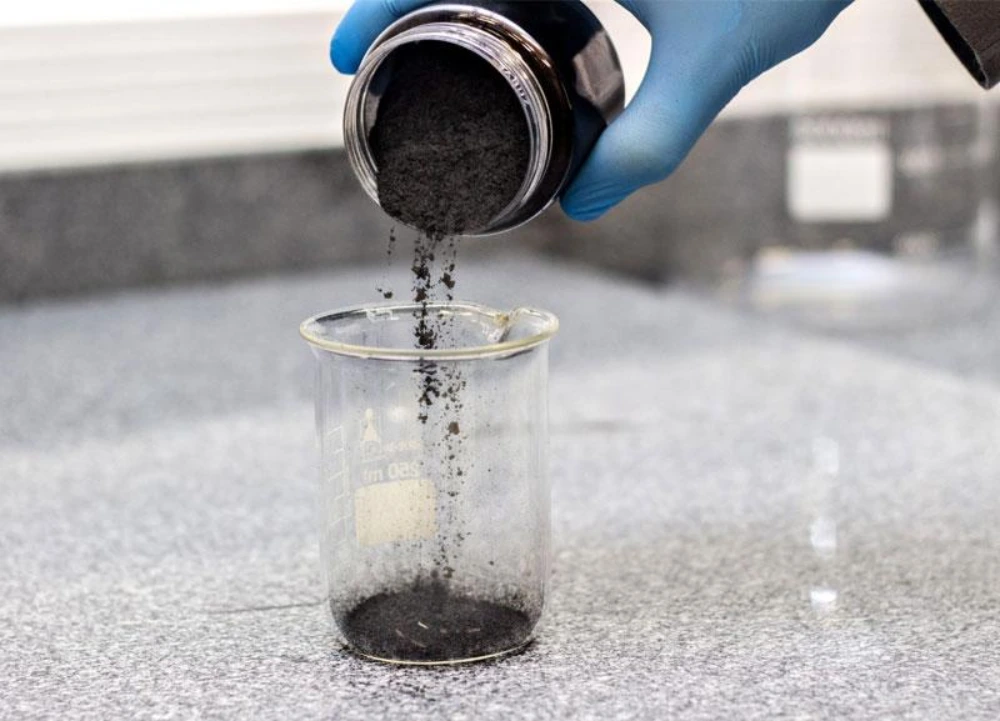
Grapherry publishes a technical data sheet describing the graphene this process produces. It comes out as a fluffy, black, dry powder.

Under characterization, the material measures out to roughly 1 to 5 layers thick, well within the range considered few-layer graphene. Carbon purity runs above 95%, made up predominantly of sp2 carbon, the strong, stable form of carbon bonding that gives graphene its properties.

Oxygen content stays under 5%, meaning minimal surface functionalization on the base graphene material. The sheets themselves measure roughly 1 to 5 microns across, and the stacking pattern is described as turbostratic, meaning the layers are rotated relative to each other rather than perfectly aligned, which is typical of high-quality few-layer graphene made this way.

How Scientists Confirm What They’ve Made

You cannot check graphene quality by looking at it. Confirming layer count, purity, and structure takes specialized testing, and Grapherry’s data sheet lays out results from three of the standard methods used across the graphene industry.

Raman Spectroscopy

Raman testing shines a laser on the material and reads the light that bounces back. The graphene showed a strong G peak, which confirms the sp2 carbon structure, and a well-defined 2D peak, which confirms a layered structure.

The ratio between those peaks landed in the range expected for few-layer graphene, and a very low ratio on a separate defect-related peak pointed to minimal structural defects and high crystallinity overall.

X-ray Photoelectron Spectroscopy (XPS)

XPS testing reads the chemical bonds on the material’s surface. The results showed a dominant signal matching sp2-bonded carbon, confirming a graphitic structure, along with only small signals from oxygen-containing bonds.

That combination points to a high-purity, mostly unmodified graphene surface rather than one that has been heavily chemically altered.

X-ray Diffraction (XRD)

XRD testing looks at how the material’s atomic structure scatters X-rays. A dominant peak in the pattern confirmed a layered carbon structure with few-layer stacking and few crystalline impurities, backing up what the Raman and XPS results already showed.

Taken together, these three tests describe the same material from three different angles: a low-defect, high-purity, few-layer graphene, which is what you want going into a cement mix where consistency matters as much as the material itself.

From Feedstock to Cement Additive: How It Gets Into Concrete

Once STREAM produces the graphene oxide, it gets dispersed in water to create a liquid additive. That liquid is what actually shows up at a cement plant or lab.

In Argo’s testing, the graphene oxide was added at just 0.05% of the cement weight, roughly five parts graphene oxide per ten thousand parts cement, using standard ASTM test cylinders cured for seven days.

At that dosage, Argo measured a 60% increase in ultimate compressive strength compared with a control mix with no graphene added, a result the company reproduced across multiple independent test batches.

That number is what most coverage of Argo focuses on, but it depends entirely on the material quality described above. A batch with inconsistent layer count or excess defects would not perform the same way twice, which is exactly the kind of variability STREAM is designed to remove.

Why the Material Science Matters for Performance

Graphene’s effect on cement comes down to surface area and structure.

A few-layer sheet has far more surface area per gram than a thicker, multi-layer flake, which gives cement hydration products more places to form and bond. High purity and low defect density mean the material behaves predictably batch after batch, which matters when you’re dosing at 0.05% and need that small amount to do the same job every time.

This is the connection between the material data in this article and the strength numbers reported elsewhere: the performance results depend on the graphene actually being what the characterization data says it is.

Few-Layer Structure

Roughly 1 to 5 layers thick.

High Purity

Carbon purity above 95%.

Low-Dosage Addition

Approximately 0.05% of cement weight in Argo’s testing.

Your Questions About STREAM and Argo’s Graphene Supply, Answered

What is the difference between STREAM-G and STREAM-O

STREAM-G produces graphene, while STREAM-O produces graphene oxide. Argo’s cement testing has used the graphene oxide form, since its surface chemistry works well as a cement additive.

Through a combination of tests. Raman spectroscopy checks layer count and defect level, X-ray photoelectron spectroscopy checks surface chemistry and purity, and X-ray diffraction checks the overall layered structure. Together they confirm what the material actually is, not just what it’s claimed to be.

A very small amount. Argo’s testing used 0.05% of the cement weight, delivered as a graphene oxide dispersion in water rather than a dry powder added directly to the mix.

The graphene is produced through STREAM, a platform developed by Grapherry, Inc. and licensed exclusively to Argo. Argo uses the material in its own construction testing programs.

STREAM-G produces graphene, while STREAM-O produces graphene oxide. Argo’s cement testing has used the graphene oxide form, since its surface chemistry works well as a cement additive.

The Bottom Line

Behind every strength number Argo reports is a material with its own detailed specification: few layers thick, high carbon purity, low defect density, and a consistent sheet size, all confirmed through Raman, XPS, and XRD testing.

That consistency is what STREAM is built to deliver, and it’s what makes it possible to add graphene oxide to cement at a dosage as small as 0.05% and still get a reliable, repeatable result.

Conclusion

Every strength number Argo reports rests on graphene that’s actually few-layer, high-purity, and consistent batch-to-batch. See how Argo’s new test program will aim to discover how graphene functions under harsh conditions in the Saskatchewan cold-weather tests and the full mechanism behind how graphene concrete works.

Explore the Science Behind Graphene-Enhanced Concrete

Discover how Argo’s graphene technology is being evaluated in concrete applications, from material characterization to performance testing.
Graphene Cement for Stucco and 3D-Printed Construction: What Argo’s Early Tests Show

Graphene Cement for Stucco and 3D Printing

Early testing by Argo Graphene Solutions explores how graphene-enhanced cement could improve stucco application, bonding, and water resistance, while opening new possibilities for 3D construction printing.

Key Findings

Better
Consistency

More consistent handling and spreadability during stucco application.

Stronger
Bonding

Improved bonding characteristics compared with the conventional mix.

Denser
Surface

A noticeably denser surface was observed after application and curing.

Water
Resistance

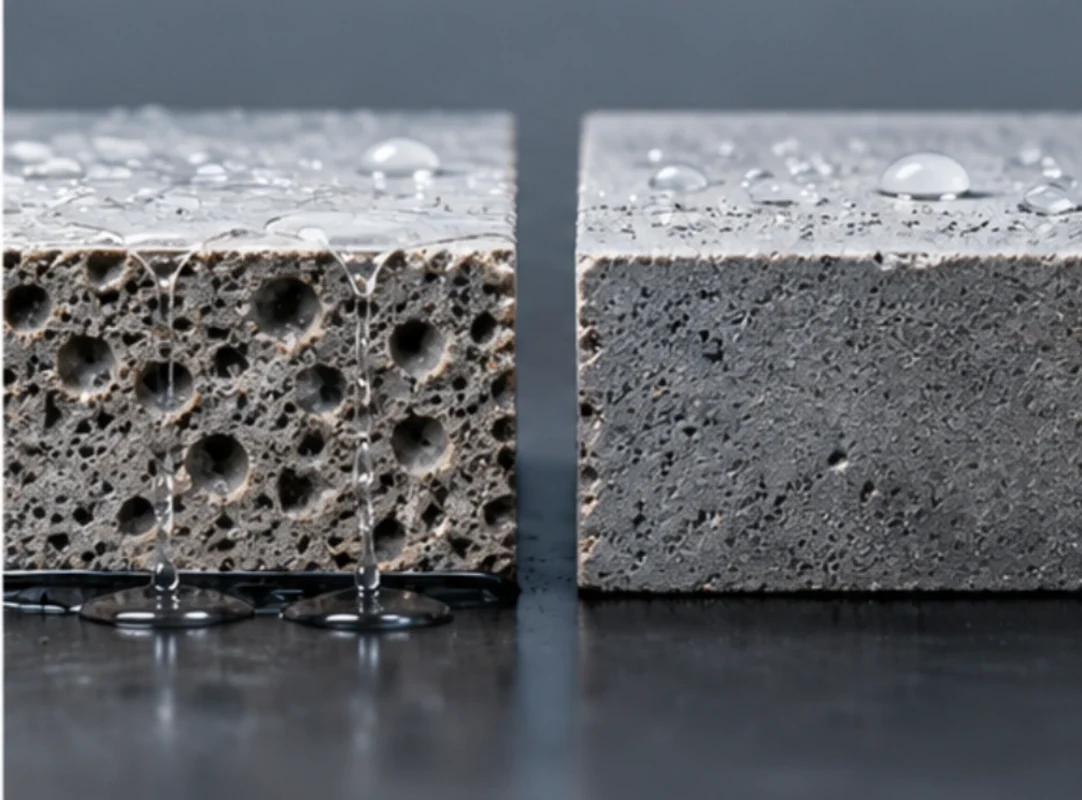
Water did not fully penetrate the graphene-enhanced scratch coat under test conditions.

The Short Version

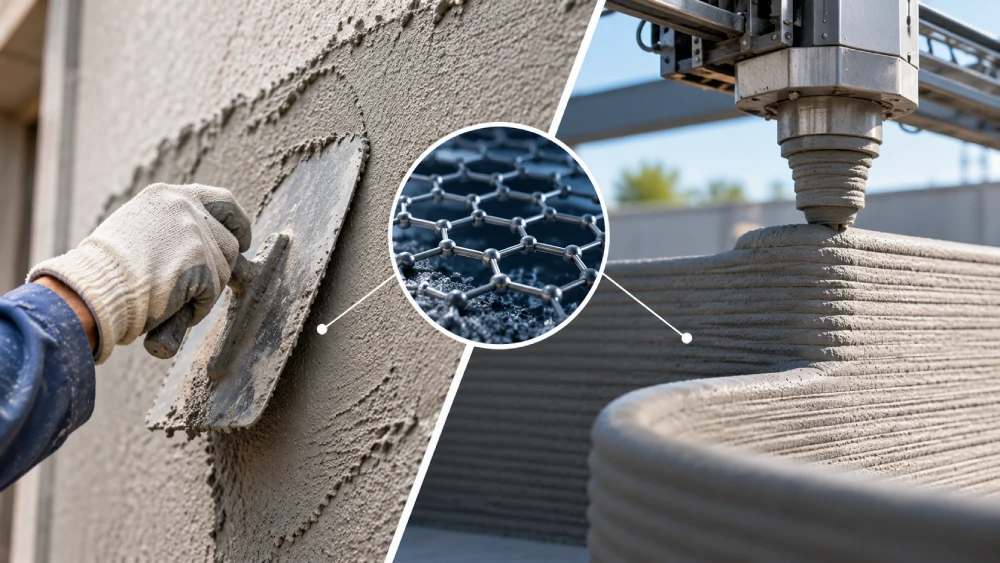
Graphene-enhanced cement is being explored beyond conventional concrete slabs. Argo Graphene Solutions recently conducted early testing to evaluate its performance in stucco scratch coat applications, while also investigating its potential for 3D construction printing.

In the stucco tests, the graphene-enhanced mixture showed promising handling characteristics, stronger bonding, a denser surface, and improved resistance to water penetration compared with a conventional control mix.

The company is also exploring how its graphene dispersion technology could support cement formulations for 3D printing, where a material must flow through a nozzle while maintaining enough cohesion to hold its shape.

  • Graphene-enhanced cement was tested against a conventional formulation in a stucco scratch coat application.
  • The mixture showed improved consistency and spreadability during application.
  • Argo observed stronger bonding and a noticeably denser surface.
  • Water did not fully penetrate the graphene-enhanced scratch coat under the test conditions.
  • 3D construction printing is being evaluated as a potential future application.

Why Stucco and 3D Printing Are Different Problems Than a Slab

Stucco application

Pouring a concrete slab and applying stucco place very different demands on a cement mixture.

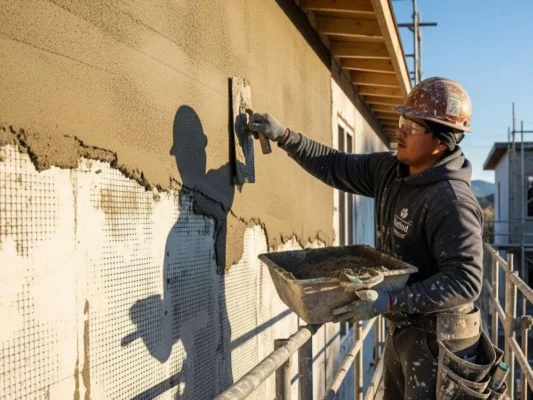
A slab needs to flow into a form and cure into a strong, uniform mass. Stucco has to spread evenly across a vertical surface, bond tightly to the material underneath, and resist water penetration through a relatively thin layer.

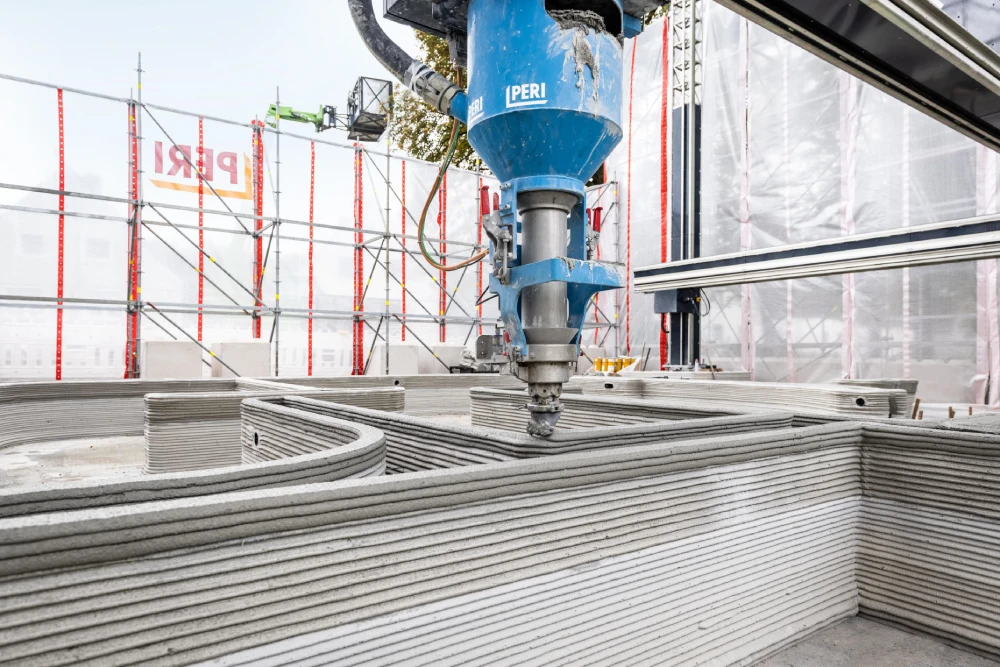
3D construction printing introduces another challenge. The mixture must flow smoothly through a nozzle, then hold its shape immediately after being deposited. Each new layer must support the weight of the next while the material continues to cure.

In both applications, workability and cohesion matter just as much as the final strength of the material. This is why Argo’s early testing looked beyond compressive strength to examine consistency, bonding, and water resistance.

What Argo Actually Tested

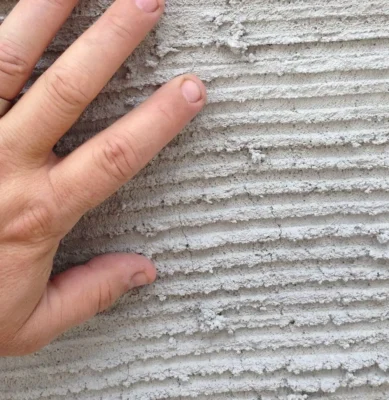
Argo blended its graphene additive directly into a cement-based scratch coat mixture, the base layer applied before the brown and finish coats in a stucco system.

The graphene-enhanced mixture was compared side by side with a conventional cement formulation containing no graphene. Argo then assessed how each mixture behaved during mixing and application before evaluating the cured scratch coat for bonding characteristics and water resistance.

Surface texture

What the Early Results Showed

The initial observations were positive across several aspects of the stucco application. Rather than focusing only on compressive strength, the testing looked at how the material handled during application and performed after curing.

01. Better Consistency and Spreadability

During application, the graphene-enhanced mixture handled more consistently than the standard formulation, with no issues encountered during mixing or placement.

For stucco, consistent spreadability matters because uneven application can create weak spots that may lead to cracking or poor adhesion in the layers applied afterward.

02. Stronger Bonding and Surface Density

Argo reported stronger bonding characteristics with the graphene-enhanced mixture, along with a noticeably denser surface compared with the conventional control.

A denser surface may indicate fewer internal gaps through which moisture and air can move over time.

03. Improved Water Resistance

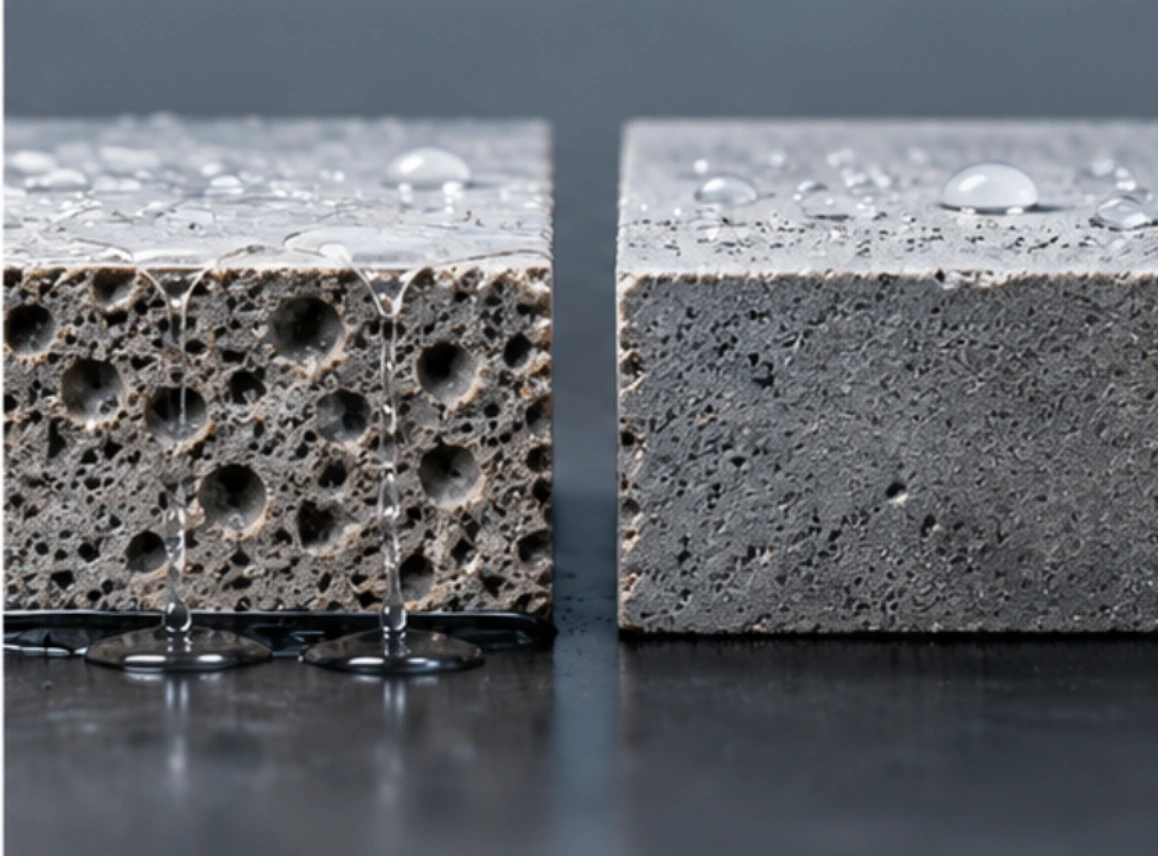
After an appropriate curing period, water did not fully penetrate through the graphene-enhanced scratch coat under the test conditions, while it did penetrate the conventional control.

This observation is consistent with the potential of graphene-enhanced cement to create a denser structure with lower permeability.

04. Early-Stage Testing

These findings are preliminary and qualitative. Argo has not yet published specific percentage improvements or a complete set of performance measurements for this application.

Further testing is needed to understand how the material performs over longer periods and under different environmental conditions.

What’s Still Being Tested

Argo has emphasized that the current results represent an early evaluation rather than a completed performance study.

The company is continuing to monitor several performance factors, including:

  • Curing behaviour and strength development over time.
  • Freeze-thaw resistance.
  • Performance under accelerated wind and heat exposure.
  • Surface strength development.
  • Compatibility with the brown and finish coats applied over the scratch coat.
  • Longer-term crack resistance and structural durability.

These results have not yet been fully published, so the early observations should be viewed as promising initial findings rather than a complete performance assessment.

Why This Matters for 3D Construction Printing

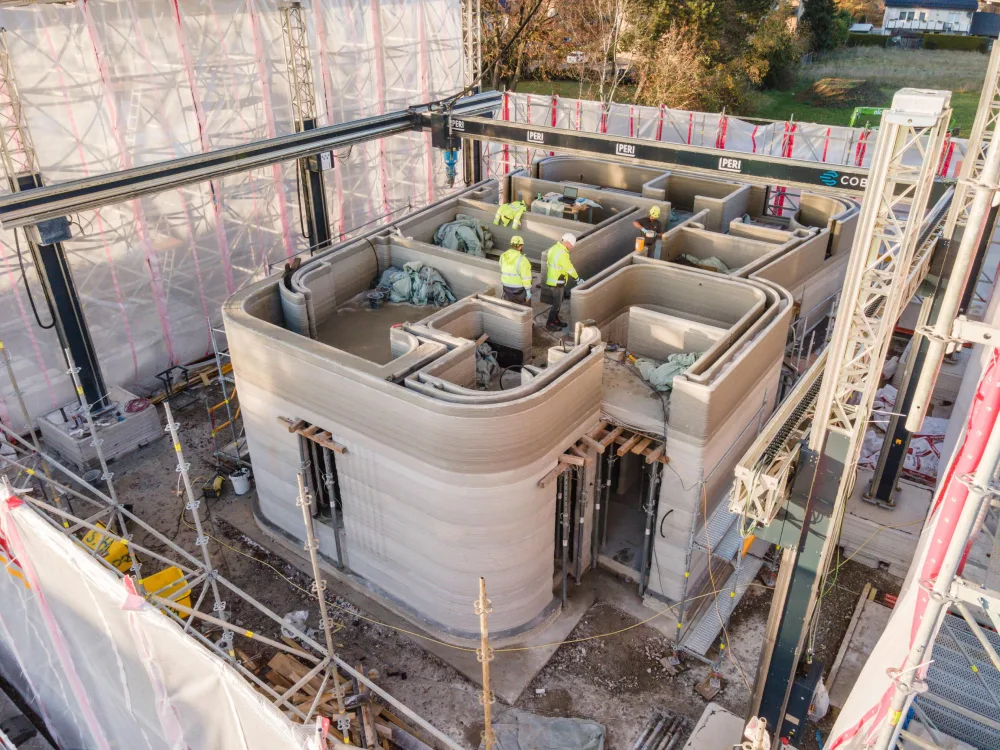
3D construction printing

3D construction printing is an emerging area of the building industry, offering the potential for faster and less labour-intensive ways to construct walls and structures.

According to Grand View Research, the global 3D printing construction market was estimated at approximately US$53.9 million in 2024, with forecasts projecting significant growth through 2030.

The technology depends on a cement mixture that can perform several jobs at once: pump smoothly, flow consistently, hold its shape immediately after printing, and cure into a strong, durable structure.

Argo believes graphene’s potential effects on mechanical strength, density, crack resistance, and water resistance could help address some of these competing requirements.

This application remains under evaluation. Argo has not yet published specific test results for graphene-enhanced 3D printing cement formulations.

What This Means if You Work With Stucco or 3D-Printed Concrete

For stucco contractors, the early findings point toward a cement mixture that may handle more consistently and offer better water resistance at the scratch coat stage.

For those working in 3D construction printing, graphene is being explored as one possible way to improve the balance between flow, cohesion, and final material performance.

Neither application should be considered a commercially proven graphene cement product based on the current testing. The results are worth watching, but further data is needed before changing project specifications or material selection.

Questions About Argo’s Stucco and 3D Printing Tests

Has Argo published performance numbers for these tests

No. The results reported so far are qualitative observations: better consistency, denser surface, improved bonding, and better water resistance, rather than specific percentage figures. Argo has said it will continue testing and collecting data.

Not commercially, based on what has been published. This is an early testing program, and Argo has described the results as preliminary rather than final.

Argo is evaluating that application based on the properties graphene has shown elsewhere, but it has not published test results specific to 3D printed cement mixes yet. That work is described as ongoing.

Argo’s concrete slab tests, including its Bristol, Tennessee pour, focused on measurable compressive strength. This stucco and 3D printing program looked at workability, adhesion, and water resistance instead, since those properties matter more for a thin surface coat or a printed layer than for a poured slab.

Stucco is applied in relatively thin layers over a surface that must withstand exposure to moisture. Better resistance to water penetration may help protect the underlying materials and support longer-term durability.

The Bottom Line

Argo’s early stucco tests suggest that graphene-enhanced cement can offer improved consistency during application, stronger bonding, a denser surface, and better resistance to water penetration compared with a standard mix.

The company is also exploring how the same graphene dispersion technology could support cement formulations for 3D construction printing, where flow, cohesion, and structural performance must work together.

Both applications are still in the evaluation stage. While the initial observations are encouraging, further testing and published performance data will be important in establishing their commercial potential.

Future applications

Building Stronger.
Smarter Infrastructure with Graphene

Application – Phase I

Graphene Concrete vs. Traditional Concrete: Full Cost and Performance Comparison

concrete

If you are pricing out your next pour, you have probably run into graphene concrete somewhere in your research, and probably a claim or two that made you raise an eyebrow. Is it really stronger? Does it actually save money, or does the higher sticker price just eat any gains you’d get from using less material?

This guide compares the real numbers behind cost, strength, and durability so you can decide which option makes sense for your project.

Key Findings

$135-$195
Traditional Concrete

Typical US national average price per cubic yard in 2026.

5-10×
Admixture Cost

Estimated cost premium for graphene admixtures compared with conventional additives.

24.35%
Strength Increase

Reported compressive strength increase at 56 days in a real test pour.

$276B
Annual Corrosion Costs

Estimated annual US corrosion costs across infrastructure and industry in a 2002 federal study.

The Short Answer

Traditional concrete costs less upfront, usually $135 to $195 per cubic yard in 2026, and it is available from almost any ready-mix plant today. Graphene concrete costs more per unit; current estimates put graphene admixtures at 5 to 10 times the price of standard additives. However, it may reduce the amount of cement or the number of slabs needed for certain applications.

For small residential jobs, traditional concrete is still the practical choice. For projects where durability and lifecycle cost matter more than the upfront bill, graphene concrete is worth a closer look.

  • Traditional concrete: $135 to $195 per cubic yard, US national average for 2026.
  • Graphene concrete: No fixed retail price yet, since it is still an emerging product. Current estimates put graphene admixture costs at 5 to 10 times those of standard additives.
  • Strength: A real test pour in Bristol, Tennessee, measured a 24.35% compressive strength increase over the design mix at 56 days.
  • Laboratory results: A separate lab test found a 60% strength increase using only 0.05% graphene oxide by weight.
  • Corrosion: A 2002 federal study estimated corrosion costs across US infrastructure and industry at $276 billion annually, with rebar corrosion in concrete structures among the contributing problems.

Upfront Cost: What You Actually Pay

Traditional Concrete

Traditional concrete has a clear, well-established price. The national average for ready-mix concrete in 2026 runs between $135 and $195 per cubic yard, depending on your region and the strength you order. You can get a quote from almost any batch plant in the country today.

Graphene Concrete

Graphene concrete does not have the same standardized pricing yet. It is still an emerging product, and most suppliers set prices case by case, project by project.

Research indicates that the graphene admixture itself can cost significantly more than standard additives. One academic review put the added cost at 5 to 10 times that of conventional concrete on a per-unit basis.

That sounds steep, but it needs context: the admixture is only one part of the total mix cost, and it is added in tiny amounts, usually 0.01% to 0.5% of the cement weight, rather than replacing another ingredient on a one-to-one basis.

Graphene Concrete vs. Traditional Concrete: Side by Side

The differences go beyond the initial price. Strength, durability, material requirements, and availability all affect which mix makes sense for a project.

concrete
Factor Traditional Concrete Graphene Concrete
Cost per cubic yard $135 to $195, US national average in 2026. No standard retail price yet. Graphene admixtures can carry an early-adopter premium that may ease as production scales up.
Compressive strength 4,000 psi typical design mix. Up to 24.35% higher at 56 days in a real test pour; up to 60% higher in laboratory testing at a 0.05% graphene oxide dose.
Durability More capillary gaps, allowing greater water and chloride ingress over time. A denser structure with lower permeability, which may reduce rebar corrosion risk.
Material needed The cement content required to meet the target strength. Potential to reduce cement content while meeting the same strength target, depending on the mix design and application.
Availability Available from almost any ready-mix plant today. Availability remains limited to specific suppliers and pilot projects as the technology commercializes.

Where the Long-Term Savings Actually Come From

The upfront price only tells part of the story. Graphene changes the internal structure of concrete while it hardens, and that may affect three areas that matter for your budget over time.

01. Less Material for the Same Strength

Because graphene concrete can achieve higher strength at the same or lower cement content in some formulations, certain projects may be able to use less material overall. That could mean less cement per cubic yard or a thinner slab designed to meet the same load requirements.

This is one way the higher admixture cost may begin to balance out.

02. Lower Repair Costs From Corrosion

Rebar corrosion is one of the expensive problems in concrete construction. Water and chloride can enter the tiny gaps inside conventional concrete, reach the steel reinforcement, and cause it to rust and expand, cracking the concrete from the inside out.

A 2002 federal study estimated corrosion costs across US infrastructure and industry at $276 billion a year. Graphene concrete’s denser structure may reduce the permeability that contributes to this problem, potentially lowering repair needs over the life of a structure.

03. Fewer Callbacks and Less Downtime

Improved crack resistance and durability may mean fewer warranty issues and repair calls after a project is completed. For contractors and owners, avoiding repeat work and downtime can matter as much as the initial invoice.

What You’re Trading Off

None of this makes graphene concrete a clear win for every project. It is worth being upfront about the trade-offs before deciding whether to use it.

  • Pricing is not standardized yet. Budgeting for a graphene mix takes more upfront coordination with your supplier than ordering a standard mix.
  • Availability is limited. You cannot order graphene concrete from every ready-mix plant the way you can standard concrete.
  • Long-term field data is still developing. Much of the public performance data comes from individual test pours and laboratory studies, rather than decades of buildings and roads in service.
  • Approvals may take extra time. Many building codes do not yet have a specific standard for nanomaterial admixtures, so approval for public projects may need to be assessed case by case.

Which One Makes Sense for Your Project?

The right choice depends on project size, exposure conditions, expected service life, and the cost of future maintenance.

Traditional Concrete

For a small residential job, such as a driveway, patio, or sidewalk, traditional concrete is still the practical choice. It is widely available, pricing is predictable, and the additional durability offered by graphene may not justify the extra coordination required to source it for a small pour.

Graphene Concrete

For larger or longer-life projects, such as infrastructure, marine structures, or structures exposed to heavy chloride or freeze-thaw cycles, the calculation may change. These are the applications where lower permeability and reduced corrosion risk could offer the greatest value, because repair costs and service life have a larger impact on total cost of ownership.

Your Questions About Graphene Concrete Costs, Answered

Is graphene concrete worth the extra cost

It depends on the project. For a small job with a short service life, the extra cost may be difficult to justify. For larger or longer-life projects where durability and repair costs matter more, potential savings on material and maintenance may outweigh the higher admixture price. A project-specific cost analysis is needed to determine whether it pays off.

There is no fixed retail price yet, but current estimates put the graphene admixture itself at 5 to 10 times the cost of standard additives. The admixture is only one part of the total project cost, however, and potential savings on cement or slab thickness may offset part of the difference in suitable applications.

Not in most areas yet. Availability is currently limited to specific suppliers and pilot projects as the technology moves toward wider commercialization. Contact suppliers directly to confirm availability in your region.

The evidence suggests potential advantages for larger and longer-life projects, particularly through lower permeability and reduced rebar corrosion risk. Corrosion is one of the recurring costs associated with concrete infrastructure. However, there is not yet enough long-term field data to establish an exact payback period for every application.

The Bottom Line

Traditional concrete wins on upfront cost and availability, and for most everyday jobs, that is exactly what you need. Graphene concrete costs more per unit today, but it may change the durability equation in ways that matter over the life of a structure, especially where corrosion, cracking, or material volume drive long-term costs.

The right choice comes down to how long the structure needs to last, the conditions it will face, and how much repair and maintenance contribute to the total project cost.

Conclusion

Whether you choose traditional concrete or graphene oxide concrete depends on your project’s priorities. However, the long-term value of graphene concrete additives and high-strength, sustainable concrete is becoming harder to ignore.

If you are comparing graphene concrete with traditional concrete or wondering whether graphene concrete is worth the cost, explore Argo’s articles on what graphene concrete is and how it works, how STREAM™ Graphene Technology operates, and the comparison of the Argo design mix with real-world test results to learn more about how the technology is being evaluated in real-world applications.

What Is Graphene Concrete, and How Does It Actually Work?

Concrete
Graphene Concrete

Discover how graphene can improve concrete strength, reduce permeability, and support more durable infrastructure.

Key Findings

24.35%
Strength Increase

Reported increase above design strength at 56 days.

60%
Laboratory Results

Reported strength increase in a separate test.

0.01–0.5%
Typical Dosage

Graphene dosage by weight of cement.

Durability
Performance Potential

Potential to reduce permeability and improve durability.

The Short Version

Graphene concrete is standard concrete mixed with a very small amount of graphene or graphene oxide, usually less than half a percent of the cement weight. That tiny addition changes how the concrete hardens, giving it a denser structure with fewer gaps for water and salt to get through. The result is concrete that is stronger, lasts longer, and often needs less material to do the same job.

  • Graphene is added in small amounts, typically 0.01% to 0.5% by weight of the cement.
  • It works by giving the concrete more places to build strong bonds while it hardens.
  • An Oct. 17, 2025, test pour in Bristol, Tennessee, USA showed a 24.35% jump in compressive strength after 56 days.
  • A separate lab test showed a 60% increase in strength with just 0.05% graphene oxide.
  • Denser concrete means less exposure to water damage, less rebar rust, and often a smaller carbon footprint.

The Problem With Standard Concrete

problem with standard concrete

Concrete is the most used building material on Earth, and for good reason. It is affordable, it holds up under pressure, and it lasts. But it has always had two big weaknesses. It can be brittle, and it is not always as tight as it looks.

When cement hardens, it often does not form a perfect, solid block. It actually forms a microscopic maze full of tiny gaps. Those gaps let water, chloride, and other chemicals sneak inside. Over the years, that moisture reaches the steel rebar, causing it to rust and expand, which in turn cracks the concrete from the inside out.

For a long time, the only fix has been to use more: thicker slabs, more rebar, more cement. That costs money, adds weight, and increases the carbon footprint of every project. Graphene offers a different approach. Instead of adding bulk, it changes the concrete’s internal structure.

What Graphene Concrete Actually Is

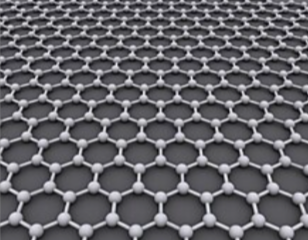
Graphene is a single layer of carbon atoms arranged in a honeycomb pattern, so thin it is measured at the scale of atoms. Despite that, it is remarkably strong, about 100 to 300 times stronger than steel by weight, and it conducts electricity well. On its own, graphene is not a building material. In concrete, it works as an additive. Manufacturers mix a small amount of graphene oxide, which is graphene combined with oxygen, into water and add it to the batch at the plant.

The dose is small, usually 0.01% to 0.5% of the cement’s weight. That is a small enough amount that it does not change how the concrete is placed or finished. What it does change is the chemistry happening inside the mix.

How Graphene Makes Concrete Stronger

When cement and water combine, they form a compound called calcium silicate hydrate, or C-S-H for short. This is the actual glue that holds the sand and gravel together in your concrete. In a standard mix, C-S-H crystals grow somewhat randomly, leaving gaps behind. Graphene changes that process in four specific ways.

01. Nucleation Effect

Graphene has a huge surface area for its size. That gives C-S-H crystals more places to start forming, so more of the cement actually reacts instead of sitting unused in the mix. Engineers call this the nucleation effect.

02. Reduced Pore Connectivity

Graphene sheets are small enough to fit within the tiny pores that would otherwise remain open. By physically blocking some of those gaps, graphene reduces the pathways water and chloride would normally use to get in.

03. Additional C-S-H Formation

Graphene oxide has chemical groups on its surface that react with leftover calcium hydroxide, a byproduct of hydration that does not add much strength on its own. That reaction produces more C-S-H, the material that actually does the binding.

04. Microcrack Control

Because graphene is strong and flexible at a microscopic scale, it can bridge tiny cracks before they widen into visible ones. It works on a similar idea to steel fibre reinforcement, just at a much smaller scale.
Put together, these four effects build a denser, more uniform structure with far fewer capillary gaps. That is what shows up in testing as higher strength and lower permeability.

How Graphene Gets Into the Mix

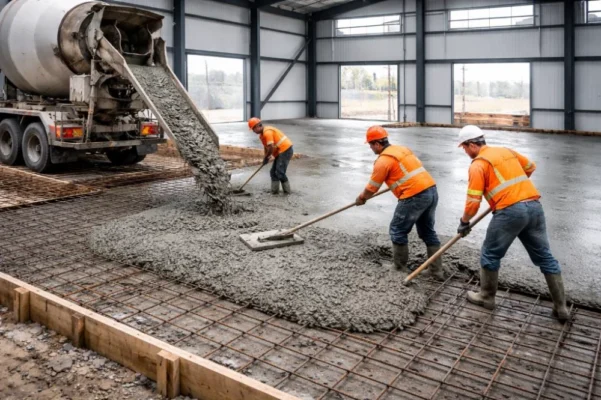
Graphene usually arrives at the batch plant as a liquid, graphene oxide suspended in water, and gets added the same way other admixtures do. No special equipment is needed. Because the dose is so small, it does not change the basic proportions of your mix design.

Graphene concrete can look drier than a standard batch. That’s even when it is not, simply because the mix is denser. Don’t add extra water on site to compensate. Beyond that, placement, finishing, and curing all follow the process you already know.

Graphene Concrete vs. Standard Concrete

Concrete
Property Standard Concrete Graphene Concrete
Strength 4,000 psi typical design mix Up to 24.35% higher at 56 days in a real test pour; up to 60% higher in laboratory testing at a 0.05% graphene oxide dose.
Durability More capillary gaps; higher water and chloride ingress over time. Denser structure with lower permeability, which reduces rebar corrosion risk.
Crack Resistance Relies on rebar and control joints to manage cracking. Graphene bridges micro-cracks at a microscopic scale before they widen into visible cracks.
Material Use Full cement content required to hit the target strength. Potential to reduce cement content while meeting the same strength target.
Property Standard Concrete Graphene Concrete
Strength 4,000 psi typical design mix Up to 24.35% higher at 56 days in a real test pour; up to 60% higher in laboratory testing at a 0.05% graphene oxide dose.
Durability More capillary gaps. Higher water and chloride ingress over time. Denser structure with lower permeability, which reduces rebar corrosion risk.
Crack Resistance Relies on rebar and control joints to manage cracking. Graphene bridges micro-cracks at a microscopic scale before they widen into visible cracks.
Material Use Full cement content required to hit the target strength. Potential to reduce cement content while meeting the same strength target.

The exact numbers vary by dosage and how well the graphene is mixed in, which is why the range above spans both a real project pour and controlled lab testing. Both point in the same direction: a denser, less porous concrete that can do more with less material.

Where You Can See It Working Today

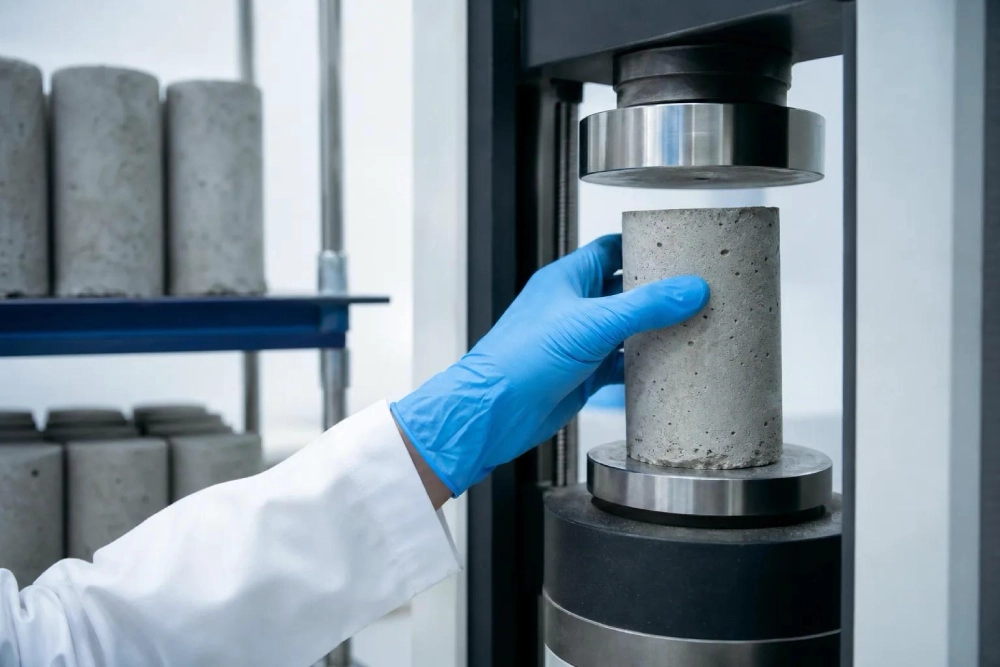
Argo Graphene Solutions poured its first graphene-infused concrete slabs in Bristol, Tennessee, in October 2025, three on-grade slabs totalling 12.5 cubic meters. Independent testing under the ASTM C39 standard recorded 3,428 psi at 7 days, 4,449 psi at 28 days (an 11% increase over the 4,000 psi design mix), and 4,974 psi at 56 days (a 24.35% increase). In a separate test, Argo measured a 60% jump in compressive strength using just 0.05% graphene oxide by weight, a result that held up across multiple independent test batches.

Beyond concrete slabs, researchers are also looking at graphene for marine structures, where lower permeability directly protects against rebar corrosion, and for uses that take advantage of graphene’s conductivity, like de-icing systems and structural sensors that can detect damage before it is visible.

What Graphene Concrete Can’t Do Yet

Graphene concrete is promising, but it is not a finished product yet, and it helps to be honest about that.

  • Field history is still short. Most public data comes from individual test pours, not years of buildings and roads holding up in the real world.
  • Graphene sheets naturally clump together in water, so getting an even mix at large scale takes real technical care.
  • The admixture costs more per unit than standard additives, though savings on cement or slab thickness can offset that.
  • Most building codes do not have a specific standard for nanomaterial admixtures yet, so approval on public projects often happens case by case.

What’s Next for Graphene Concrete

Graphene concrete is likely to move more and more from pilot projects to industry-standard specifications, as more test pours begin to publish full 28-day and 56-day results more often. As mixing methods continue to improve, large-scale infrastructure work, where lifecycle cost and durability matter most, is likely where that shift will happen first.

Graphene Concrete

Why Contractors Are Choosing Graphene Concrete Solutions

Graphene concrete is likely to move more and more from pilot projects to industry-standard specifications, as more test pours begin to publish full 28-day and 56-day results more often. As mixing methods continue to improve, large-scale infrastructure work, where lifecycle cost and durability matter most, is likely where that shift will happen first.

Questions About Graphene Concrete

Does graphene concrete cost more than regular concrete

The admixture itself costs more upfront. But because it can reduce how much cement or how thick a slab needs to be, total project costs often come out lower.

Yes. The graphene is suspended in a water-based liquid and mixed directly into the batch, so crews never have to handle loose nanoparticles.

Usually between 0.01% and 0.5% of the cement weight. That is a small amount, but it is enough to change how the mix hardens.

No. You place, finish, and cure it the same way as standard concrete. The only real change happens at the batch plant.

Diversified Materials Testing LLC tested cylinder samples under ASTM C39 on a real-world test pour in Bristol, Tennessee, which showed a 24.35% strength increase over the design mix at 56 days.

A separate lab test measured a 60% increase at a much lower dose, and that result repeated across multiple batches.

Graphene concrete is not a new kind of cement. It is a small addition that changes how the same cement hardens, giving it more room to build a denser, tighter structure. That shows up as higher strength, lower permeability, and in some cases, less material needed overall.

The science behind it is well-documented, and real-world test data, such as the Bristol, Tennessee pour and others, back it up at the project scale. It is still early days for widespread use, but for anyone planning their next pour, both the chemistry and the early numbers are pointing the way.

The Bottom Line

Graphene-enhanced concrete offers a promising approach to improving material performance through carefully engineered additives.

As research and field testing continue, graphene technology may create opportunities for stronger, more durable, and more resource-efficient construction materials.

Building Stronger.
Reducing Material Impact.

Application – Phase I

Argo Graphene Solutions Corp. Closes Upsized Private Placement for Gross Proceeds of $1.47 Million

Vancouver, British Columbia–(Newsfile Corp. – September 16, 2026) – Argo Graphene Solutions Corp. (CSE: ARGO) (OTCQB: ARLSF) (FSE: 94Y) (“Argo” or the “Company”) is pleased to announce that the Company has closed its previously announced upsized non-brokered private placement offering, issuing 1,841,571 units (the “Units”) at a price of $0.80 per Unit for aggregate gross proceeds of $1,473,257 (the “Offering”).

Each Unit is comprised of one common share in the capital of the Company and one share purchase warrant. Each warrant entitles the holder to purchase one additional common share in the capital of the Company at a price of $1.00 per share until September 15, 2027.

In connection with the Offering, the Company paid aggregate finder’s fees of $57,056 and issued an aggregate of 71,320 finder’s warrants to eligible finders. Each finder’s warrant entitles the holder to purchase one common share in the capital of the Company at a price of $1.00 per share until September 15, 2027.

The Company plans to use the proceeds of the Offering to advance its STREAM™ commercialization strategy, including securing and developing a facility in the Chicago, Illinois area, advancing the STREAM™ technology and related intellectual property, advancing development of a graphene refinery, and for general corporate and working capital purposes.

“This financing strengthens our ability to work towards moving STREAM™ toward commercial-scale manufacturing,” said Dr. Vikas Berry, CEO of Argo. “Our next phase is focused on advancing the graphene refinery, scaling production of graphene and graphene oxide, and working with industry partners to accelerate commercial applications.”

All securities issued under the Offering are subject to a four-month hold period expiring on January 16, 2027, in accordance with applicable Canadian securities laws and Canadian Securities Exchange policies.

A director of the Company participated in the Offering by acquiring an aggregate of 25,000 Units for aggregate proceeds of $20,000, and such participation is considered to be a “related party transaction” for purposes of Multilateral Instrument 61-101 (“MI 61-101”). The Company is relying on the exemptions from the formal valuation requirements contained in section 5.5(a) of MI 61-101 and the minority shareholder approval requirements contained in section 5.7(1)(a) of MI 61-101 as the fair market value of the related party’s participation is not more than 25% of the Company’s market capitalization. The Company did not file a material change report in respect of the related party transaction at least 21 days before the closing of the Offering, which the Company deems reasonable in the circumstances in order to close the Offering in an expeditious manner.


About Argo Graphene Solutions Corp.

Argo Graphene Solutions Corp. is a Canadian advanced materials company developing and commercializing graphene technologies based on the proprietary STREAM™ production platform, exclusively licensed from Grapherry with a pathway to full ownership. Led by CEO Dr. Vikas Berry, Argo is developing a vertically integrated graphene refinery platform designed to connect graphene and graphene oxide production with application development, industrial testing and commercialization.

The Company is evaluating STREAM™ materials across multiple industrial markets, including energy storage, AI infrastructure, construction, composites, semiconductors and advanced electronics, agriculture, coatings and other emerging applications. Argo’s strategy combines advanced-material production, application development, testing, industry collaboration and commercialization.

For further information please contact:

Robert Intile, CFO
Argo Graphene Solutions Corp.
Email: robert.intile@argographene.com
Phone: 604-763-4017
Website: www.argographene.com

Social Media: LinkedIn | Instagram | Facebook | X / Twitte


The Canadian Securities Exchange has not reviewed this press release and does not accept responsibility for its adequacy or accuracy.

This news release does not constitute an offer to sell or a solicitation of an offer to buy nor shall there be any sale of any of the Company’s securities in any jurisdiction in which such offer, solicitation or sale would be unlawful, including any of the securities in the United States of America. The Company’s securities have not been and will not be registered under the United States Securities Act of 1933, as amended (the “1933 Act”) or any state securities laws and may not be offered or sold within the United States or to, or for account or benefit of, U.S. Persons (as defined in Regulation S under the 1933 Act) unless registered under the 1933 Act and applicable state securities laws, or an exemption from such registration requirements is available.

Forward-Looking Statements: Certain information in this press release constitutes “forward-looking information” under Canadian securities legislation. Forward-looking information includes, but is not limited to: statements regarding the use of proceeds of the Offering; the Company’s plans to advance its STREAM™ commercialization strategy; the securing and development of a facility in the Chicago, Illinois area; the continued development of the STREAM™ technology and related intellectual property; the development and advancement of a graphene refinery; the scaling of production of graphene and graphene oxide toward commercial-scale manufacturing; the Company’s plans to work with industry partners and accelerate commercial applications; and the Company’s broader strategy of developing and commercializing STREAM™ materials across multiple industrial markets. Forward-looking statements are based on management’s opinions and estimates as of the date of this release and are subject to known and unknown risks, uncertainties, and other factors that may cause actual results to differ materially. These factors include, but are not limited to: risks relating to the development, scale-up and commercialization of new technologies; risks associated with securing, developing and operating the proposed facility; manufacturing and operational risks; the risk that anticipated production capacity may not be achieved; financing and capital requirements; intellectual property risks; the ability to establish and maintain strategic and industry relationships; product testing, validation and market acceptance risks; competitive pressures; supply-chain and raw-material risks; and general economic, market and business conditions. Argo undertakes no obligation to update forward-looking statements except as required by applicable securities laws. Readers should not place undue reliance on forward-looking information.

Argo Graphene Solutions Appoints Leading Battery and Energy Storage Scientist Dr. Said Al-Hallaj to Board of Directors

Vancouver, British Columbia–(Newsfile Corp. – September 2, 2026) – Argo Graphene Solutions Corp. (CSE: ARGO) (OTCQB: ARLSF) (FSE: 94Y) (“Argo” or the “Company”) is pleased to announce the appointment of Dr. Said Al-Hallaj, PhD, an internationally recognized battery and energy-storage scientist, entrepreneur and technology commercialization specialist, to the Company’s Board of Directors.

Dr. Al-Hallaj brings more than 25 years of scientific, academic and commercial experience spanning lithium-ion batteries, battery thermal management and safety, energy storage, electric mobility, renewable energy and technology commercialization.

He currently serves as Chief Battery Scientist at Beam Global (NASDAQ: BEEM), a clean-technology company focused on sustainable infrastructure and electrification. He is also a member of Grapherry’s Advisory Board, where he has worked alongside Grapherry founder and Argo CEO Dr. Vikas Berry in advancing graphene commercialization. Dr. Al-Hallaj is also founder and CEO of NETenergy, a Chicago-based thermal-energy-storage technology company, and previously served as Chairman and CEO of All Cell Technologies LLC.

Dr. Al-Hallaj holds a PhD in Chemical Engineering from Illinois Institute of Technology, as well as bachelor’s and master’s degrees in Chemical Engineering from Jordan University of Science and Technology. His academic career has included positions at Illinois Institute of Technology, the University of Illinois Chicago, Northwestern University, and Tohoku University in Japan.

His scientific and professional accomplishments have received significant recognition. Dr. Al-Hallaj has been recognized among the world’s top 2% of scientists in Chemical Engineering in the Stanford-led science-wide ranking of highly cited researchers, and his published scientific research has accumulated more than 17,000 citations. In 2022, he received the Illinois Tech Alumni Professional Achievement Award, recognizing outstanding professional achievement and distinction in his field. He also served on the Advisory Board of Illinois Tech’s Armour College of Engineering and the Industry Advisory Board of the Department of Mechanical and Industrial Engineering at the University of Illinois Chicago.

Beyond his scientific and academic work, Dr. Al-Hallaj has built an extensive track record in technology commercialization and entrepreneurship, including translating university research into commercial ventures. He has served as a Commercialization Fellow with the University of Illinois Chicago Office of Technology Management and has successfully spun off two university-based technology startups. He has also mentored technology startups associated with the University of Chicago, UIC, Argonne National Laboratory and the University of Auckland.

Strategic Alignment with Argo’s Graphene Commercialization Strategy

Dr. Al-Hallaj’s appointment comes as Argo advances the commercialization of STREAM™, the proprietary graphene production technology exclusively licensed to Argo by Grapherry, with a contractual pathway to full ownership. As a member of Grapherry’s Advisory Board who has worked alongside Dr. Berry and developed an understanding of STREAM™ and its potential applications, Dr. Al-Hallaj brings to Argo’s Board existing familiarity with the technology at the centre of the Company’s graphene commercialization strategy.

Argo is evaluating higher-value applications for STREAM-G™ graphene and STREAM-O™ graphene oxide across energy storage, advanced electronics, AI infrastructure, construction, composites and other advanced-material markets.

Energy storage represents a potentially significant commercial opportunity for advanced graphene materials. Graphene is being evaluated across the battery industry for applications including enhanced conductivity, electrode performance and thermal management. Argo intends to leverage its STREAM™ platform and growing battery expertise to identify and advance applications where STREAM™-produced graphene and graphene oxide may deliver meaningful performance and commercial advantages.

The Company believes Dr. Al-Hallaj’s particular expertise in battery technology, energy storage, thermal management, electric mobility and technology commercialization complements Argo’s expanding focus on potential graphene applications in next-generation energy-storage technologies.

Dr. Vikas Berry, CEO and President of Argo Graphene Solutions, commented, “Said is an exceptional addition to Argo’s Board at an important stage in the Company’s development. We are building Argo around world-class scientific expertise with a clear objective of advancing graphene from the laboratory toward commercially relevant applications. Said brings deep expertise in batteries and energy storage, together with extensive experience commercializing advanced technologies. As we advance STREAM™ and pursue opportunities across energy storage, electronics and other high-value markets, his expertise will strengthen both our technical and commercialization strategy. I am very pleased to welcome Said to the Board.”

Dr. Said Al-Hallaj commented, “Having worked alongside Vikas and the Grapherry team, I have had the opportunity to understand STREAM™, the science behind the technology and its potential across a range of advanced-material applications. I believe Argo represents an exciting opportunity to combine innovative graphene production technology with the application expertise required to move advanced materials toward meaningful commercial use.

“Energy storage is an area where I believe advanced graphene materials warrant significant attention. I look forward to working with the Argo team to identify and evaluate where STREAM™ graphene and graphene oxide can address real industry challenges and, supported by appropriate testing and validation, create meaningful commercial opportunities.”

Complementary Scientific Leadership

The addition of Dr. Al-Hallaj further strengthens Argo’s scientific and technical leadership as the Company advances its strategy to develop a vertically integrated graphene refinery and commercialization platform.

Dr. Berry brings more than two decades of graphene research, intellectual-property development and advanced-materials expertise, while Dr. Al-Hallaj brings extensive expertise in battery systems, energy storage, thermal management, electrification and commercialization.

Current Argo Director Sean McAlpine, P.Eng., further complements this expertise as a chemical and nanomaterials engineer with experience in cementitious systems and the development and scale-up of advanced materials for industrial and infrastructure applications, including expertise relevant to Argo’s graphene-enhanced construction initiatives.

Dr. Berry added, “As we build Argo, we are deliberately bringing together complementary scientific, engineering and commercialization expertise around STREAM™. Sean’s experience in nanomaterials, cementitious systems and industrial scale-up provides valuable expertise for our work in construction and infrastructure, while Said brings deep knowledge of batteries, energy storage and commercialization. This combination of expertise strengthens our ability to evaluate STREAM-G™ graphene and STREAM-O™ graphene oxide across multiple applications and pursue the opportunities where we believe these materials can deliver the greatest commercial value.”


About Argo Graphene Solutions Corp.

Argo Graphene Solutions Corp. is a Canadian advanced materials company developing and commercializing graphene technologies based on the proprietary STREAM™ production platform, exclusively licensed from Grapherry with a pathway to full ownership. Led by CEO Dr. Vikas Berry, Argo is developing a vertically integrated graphene refinery platform designed to connect graphene and graphene oxide production with application development, industrial testing and commercialization.

The Company is evaluating STREAM™ materials across multiple industrial markets, including energy storage, AI infrastructure, semiconductors and advanced electronics, construction, composites, agriculture, coatings and other emerging applications. Argo’s strategy combines advanced-material production, application development, testing, industry collaboration and commercialization.

For further information please contact:

Robert Intile, CFO
Argo Graphene Solutions Corp.
Email: robert.intile@argographene.com
Phone: 604-763-4017
Website: www.argographene.com

Social Media: LinkedIn | Instagram | Facebook | X / Twitte


The Canadian Securities Exchange has not reviewed this press release and does not accept responsibility for the adequacy or accuracy of this news release.

Forward-Looking Statements: Certain statements contained in this news release constitute forward-looking information within the meaning of applicable Canadian securities laws. Forward-looking information includes, but is not limited to, statements regarding the development, advancement and commercialization of the STREAM technology; the potential applications, performance and commercial opportunities for STREAM-G graphene and STREAM-O graphene oxide, including in energy storage, advanced electronics, AI infrastructure, construction, composites and other markets; the Companys plans to develop a vertically integrated graphene refinery and commercialization platform; and the Companys plans regarding testing, validation, application development, industry collaboration and commercialization. Forward-looking information is based on managements current expectations, estimates and assumptions and is subject to known and unknown risks, uncertainties and other factors that may cause actual results or events to differ materially from those anticipated.

Such risks and uncertainties include, among others, the Companys ability to successfully develop, scale, test, validate and commercialize its technologies and materials; the results of testing and validation; market acceptance and demand for graphene-based products; the ability to establish commercial relationships and obtain sufficient financing; risks associated with the Companys licence arrangements with Grapherry and its contractual pathway to ownership of the STREAM technology; competition, regulatory matters and general economic and market conditions. There can be no assurance that forward-looking information will prove to be accurate, and readers should not place undue reliance on such information. Forward-looking information is provided as of the date of this news release, and the Company undertakes no obligation to update or revise it except as required by applicable securities laws.

ARGO GRAPHENE SOLUTIONS CORP (“ARGO-Z;ARLSF-0;94Y-F”) – $1 Million Financing to Advance STREAM(TM) Graphene Refinery – Strategy and Provides Corporate Update

Argo Graphene Solutions Corp. (“Argo” or the “Company”) is pleased to announce a proposed non-brokered private placement (the “Offering”) of up to 1,000,000 units (each, a “Unit”) at a price of $1.00 per Unit, for aggregate gross proceeds of up to $1,000,000.

Each Unit will consist of one common share of the Company and one common share purchase warrant (each, a “Warrant”), with each Warrant entitling the holder to acquire one additional common share at an exercise price of $1.20 for a period of one year from the date of issuance.

The securities issued pursuant to the Offering will be subject to a statutory four-month hold period from the date of issuance in accordance with applicable Canadian securities laws. The Company may pay finder’s fees in connection with the Offering in accordance with applicable securities laws and the policies of the Canadian Securities Exchange (the “Exchange”), if applicable. Closing of the Offering is subject to receipt of all necessary approvals, including acceptance by the Exchange.

The Offering will have an over-allotment option for up to an additional 200,000 Units for additional gross proceeds of up to $200,000, exercisable at the Company’s discretion.

The Company intends to use the proceeds of the Offering to advance the next phase of its STREAM commercialization strategy, including securing and developing a facility in the Chicago, Illinois area to support continued development of the STREAM technology and related intellectual property, the establishment of a graphene refinery and general corporate and working capital purposes.

Advancing the STREAM Graphene Refinery

Developed by Grapherry, Inc. (“Grapherry”) and Dr. Vikas Berry, Argo’s CEO and Grapherry’s founder, STREAM, a proprietary production platform exclusively licensed to Argo with a contractual pathway to full ownership, is being designed to convert carbon-rich feedstocks into advanced graphene materials while addressing key challenges associated with graphene commercialization, including scalability, material consistency, manufacturing efficiency and commercial integration.

A key anticipated attribute of STREAM is its ability to support two distinct material pathways: STREAM-G graphene and STREAM-O graphene oxide. The two materials possess different functional characteristics, providing Argo with the flexibility to potentially pursue applications across multiple industries rather than developing the technology around a single product or end market.

STREAM is also being designed to utilize multiple carbon-rich feedstocks, reducing reliance on mined natural graphite as the primary raw material and potentially providing advantages in raw-material sourcing, supply-chain resilience, production flexibility and manufacturing economics.

Argo is evaluating STREAM graphene and graphene oxide across multiple markets, including energy storage and batteries, AI infrastructure and data centres, semiconductors and advanced electronics, construction and infrastructure, composites and advanced materials, agriculture, coatings and industrial applications, and emerging technologies.

The Company’s commercialization strategy is focused on identifying applications where STREAM materials can deliver measurable performance advantages, validating those applications through testing and industry collaboration, and pursuing commercial opportunities through material supply, technology development, licensing and strategic partnerships.

Dr. Vikas Berry, Chief Executive Officer of Argo, states, “This financing represents an important step in executing our strategy to build a vertically integrated graphene refinery around the STREAM technology. Following years of research, development and successful pilot-scale production, our focus is now on advancing manufacturing capacity and commercial applications. STREAM is being developed to produce both graphene and graphene oxide from carbon-rich feedstocks and pursue opportunities across multiple high-growth industrial markets. We believe the proposed Chicago-area facility can provide the foundation for the next stage of Argo’s development.”

Dr. Berry is an internationally recognized graphene scientist, entrepreneur and founder of Grapherry. As inventor of the proprietary STREAM graphene production platform, author or co-author of more than 100 scientific publications and inventor on numerous patents, Dr. Berry has spent more than two decades developing scalable graphene manufacturing technologies and now leads Argo’s commercialization strategy.

Dr. Berry and Sean McAlpine, a director of Argo, are conducting a series of meetings in Germany and Switzerland, as well as other European countries, over the next two weeks to discuss the Company’s strategic plan, technology development activities and plans for advancing its North American graphene refinery.

Advanced Carbons Council Membership

Argo also recently joined the Advanced Carbons Council (“ACC”), an international industry organization focused on advancing the science, standards, commercial adoption and strategic deployment of advanced carbon materials.

The ACC serves carbon producers, industrial users, investors and governments across a broad range of advanced carbon materials and industry verticals. Its activities include standards and certification, testing and validation, market intelligence, application development, commercialization and industry collaboration.

Membership provides Argo with access to a broader advanced-carbon ecosystem as the Company advances STREAM production, technical validation, application development, industry relationships and commercialization initiatives.

Dr. Berry comments, “The Advanced Carbons Council brings together many of the technical, industrial and commercial participants helping advance the next generation of carbon materials. As Argo scales STREAM and develops applications across multiple markets, we believe participation in this network can support our validation, industry collaboration and commercialization efforts.”


About Argo Graphene Solutions Corp.

Argo Graphene Solutions Corp. is a Canadian advanced materials company developing and commercializing graphene technologies based on the proprietary STREAM production platform, exclusively licensed from Grapherry with a pathway to full ownership. Led by CEO and STREAM inventor Dr. Vikas Berry, Argo is advancing a vertically integrated graphene refinery strategy designed to produce both graphene and graphene oxide from carbon-rich feedstocks.

The Company is evaluating STREAM materials across multiple industrial markets, including energy storage, AI infrastructure, semiconductors and advanced electronics, construction, composites, agriculture, coatings and other emerging applications. Argo’s strategy combines advanced-material production, application development, testing, industry collaboration and commercialization.

For further information please contact:

Robert Intile, CFO
Argo Graphene Solutions Corp.
Email: robert.intile@argographene.com
Phone: 604-763-4017
Website: www.argographene.com

Social Media: LinkedIn | Instagram | Facebook | X / Twitte


The Canadian Securities Exchange has not reviewed this press release and does not accept responsibility for the adequacy or accuracy of this news release.

This news release does not constitute an offer to sell or a solicitation of an offer to buy nor shall there be any sale of any of the Company’s securities in any jurisdiction in which such offer, solicitation or sale would be unlawful, including any of the securities in the United States of America. The Company’s securities have not been and will not be registered under the United States Securities Act of 1933, as amended (the “1933 Act”) or any state securities laws and may not be offered or sold within the United States or to, or for account or benefit of, U.S. Persons (as defined in Regulation S under the 1933 Act) unless registered under the 1933 Act and applicable state securities laws, or an exemption from such registration requirements is available.

This news release contains “forward-looking information” within the meaning of applicable Canadian securities legislation. Forward-looking information includes, but is not limited to: statements regarding the completion of the Offering and the amount of proceeds to be raised thereunder; the payment of finder’s fees and receipt of all necessary approvals, including acceptance by the Exchange; the anticipated use of proceeds of the Offering; the Company’s plans to secure and develop a facility in the Chicago, Illinois area; the development and establishment of a graphene refinery and anticipated production the continued development, scaling and commercialization of the STREAM technology and related intellectual property; the ability of STREAM to produce graphene and graphene oxide from carbon-rich feedstocks and the potential benefits thereof; the evaluation, testing and validation of STREAM materials for applications across various industries; the Company’s plans to pursue commercial opportunities through material supply, technology development, licensing, strategic partnerships and industry collaboration; the potential performance, applications and commercial adoption of STREAM materials; the Company’s plans to advance its vertically integrated graphene production and commercialization strategy; and the anticipated benefits of the Company’s membership in the Advanced Carbons Council. Forward-looking information is based on assumptions considered reasonable by management as of the date of this news release. Forward-looking information is subject to known and unknown risks, uncertainties and other factors that may cause actual results to differ materially from those expressed or implied, including the risk that the Offering may not be completed as anticipated or at all; failure to obtain required regulatory approvals; financing and capital requirements; risks associated with securing, developing and operating the proposed facility; technological, development, manufacturing and scale-up risks; the risk that anticipated production capacity may not be achieved; risks relating to the performance, testing, validation and commercialization of the STREAM technology and related products; the Company’s need for additional financing to advance its business objectives and the risk that such financing may not be available on acceptable terms; market acceptance and competitive risks; supply-chain and raw-material risks; a continued working relationship between the Company and Grapherry for the duration of their agreement; and general economic, market and business conditions. Readers are cautioned not to place undue reliance on forward-looking information. Forward-looking information speaks only as of the date hereof, and the Company undertakes no obligation to update or revise such information except as required by applicable securities laws.

Argo Graphene Solutions Appoints Dr. Vikas Berry as Chief Executive Officer

Vancouver, British Columbia – (Newsfile Corp. – July 17, 2026) – Argo Graphene Solutions Corp. (CSE: ARGO) (OTCQB: ARLSF) (FSE: 94Y) (“Argo” or the “Company“) is pleased to announce the appointment of Dr. Vikas Berry as Chief Executive Officer of the Company.

Dr. Berry succeeds Mr. Sean McAlpine, who has served as Interim Chief Executive Officer since June 2026. Mr. McAlpine remains a Director of the Company and continues to play an important role supporting Argo’s strategic growth initiatives.

Dr. Berry’s appointment marks a defining milestone in Argo’s evolution as the Company aims to advance from technology acquisition to commercialization. As the inventor of the proprietary STREAM™ graphene production platform, he is uniquely qualified to lead Argo as it works towards executing its strategy to commercialize the technology under the Company’s previously announced exclusive worldwide licence agreement, which includes a pathway to full ownership of the STREAM™ technology and related intellectual property upon satisfaction of the agreed consideration provisions.

Leadership Transition

Following a review of potential executive candidates, the Board concluded that the individual best positioned to lead Argo’s next phase of growth was the inventor of the Company’s licensed STREAM™ technology. Sean McAlpine, who has served as Interim Chief Executive Officer since the closing of the Company’s previously announced exclusive worldwide license agreement with Grapherry, Inc. continues to serve as a Director of the Company.

Sean McAlpine, states, “Dr. Berry combines world-class scientific expertise with a deep understanding of commercial product development and industrial manufacturing. His decision to lead Argo demonstrates his belief in both the STREAM™ technology and our vision of building a leading graphene commercialization company. We are delighted to welcome Vikas as our Chief Executive Officer.”

A Visionary Leader for Graphene Commercialization

Dr. Vikas Berry is an internationally recognized graphene scientist, inventor, entrepreneur, and founder of Grapherry, Inc., where he developed the proprietary STREAM™ graphene production platform. Over the past two decades, his work has focused on solving one of the graphene industry’s greatest challenges, developing scalable, cost-effective manufacturing technologies designed to advance graphene from scientific research into real-world industrial applications.

Dr. Berry is committed to progressing the STREAM™ platform towards commercialization and executing a vision of building a vertically integrated graphene production and commercialization company serving multiple global industries.

Dr. Vikas Berry, states, “I am honoured and humbled to be entrusted with leading Argo during such an exciting period in the Company’s evolution. The opportunity to lead the commercialization of the STREAM™ technology and translate years of research into real-world industrial applications alongside the talented team at Argo made the decision to accept this position an easy one. Together, we are aiming to build a vertically integrated graphene company focused on delivering scalable solutions across multiple high-growth industries, including energy storage, semiconductors, artificial intelligence infrastructure, construction, agriculture, and advanced manufacturing. I look forward to working with our Board, our employees, our partners, and our shareholders as we work to establish Argo as a leading graphene manufacturing and commercialization company.”

Advancing Argo’s Commercialization Strategy

The successful cement testing recently announced by the Company represents an important early validation of the proprietary STREAM™ graphene production platform, demonstrating its ability to deliver measurable performance improvements in commercially relevant applications.

While construction materials represent one of several significant commercialization opportunities, Argo’s strategy extends well beyond a single industry. The Company is actively evaluating and advancing graphene-enabled technologies across multiple high-growth markets, including energy storage, advanced battery technologies, artificial intelligence infrastructure, data centres, semiconductors, advanced electronics, agriculture, coatings, composites, and industrial manufacturing.

Global demand for next-generation materials continues to accelerate as industries seek lighter, stronger, more conductive, and more sustainable solutions. Management believes graphene has the potential to become an enabling material across many of these markets, and that the proprietary STREAM™ platform provides the technological foundation to support scalable commercial production.

As the Company continues to expand its research, product development, strategic partnerships, and commercial validation programs, Argo’s objective remains clear: to become a leading North American graphene producer and commercialization company serving multiple industrial sectors through a diversified portfolio of graphene-enabled solutions.

About Argo Graphene Solutions Corp.

Argo Graphene Solutions Corp. is a Canadian advanced materials company focused on the development and commercialization of graphene-enhanced technologies and products for applications in construction, infrastructure, agriculture, and industrial manufacturing. The Company is advancing graphene solutions designed to improve material performance characteristics including strength, durability, conductivity, and water resistance across a range of industrial and commercial applications.

Argo’s strategic focus includes graphene-enhanced concrete and cement technologies, infrastructure materials, agricultural applications, and next-generation industrial products. Through ongoing research, development, strategic partnerships, and technology acquisitions, Argo is positioning itself to participate in the rapidly expanding global graphene market and broader advanced materials sector.

For further information please contact:

Robert Intile, CFO
Argo Graphene Solutions Corp.
Email: robert.intile@argographene.com
Phone: 604-763-4017
Website: www.argographene.com

Social Media: LinkedIn | Instagram | Facebook | X / Twitte


The Canadian Securities Exchange has not reviewed this press release and does not accept responsibility for the adequacy or accuracy of this news release.

This news release does not constitute an offer to sell or a solicitation of an offer to buy nor shall there be any sale of any of the Company’s securities in any jurisdiction in which such offer, solicitation or sale would be unlawful, including any of the securities in the United States of America. The Company’s securities have not been and will not be registered under the United States Securities Act of 1933, as amended (the “1933 Act”) or any state securities laws and may not be offered or sold within the United States or to, or for account or benefit of, U.S. Persons (as defined in Regulation S under the 1933 Act) unless registered under the 1933 Act and applicable state securities laws, or an exemption from such registration requirements is available.

This news release contains “forward-looking information” within the meaning of applicable Canadian securities legislation. Forward-looking information includes, but is not limited to: statements regarding the Company’s commercialization strategy for the STREAM™ graphene production platform; the anticipated development, commercialization and market adoption of the STREAM™ technology and graphene-enabled products; the Company’s plans to expand its research, product development, commercial validation activities and strategic partnerships; the potential applications of the Company’s technology across construction materials, energy storage, batteries, artificial intelligence infrastructure, data centres, semiconductors, advanced electronics, agriculture, coatings, composites and industrial manufacturing; the Company’s objective of becoming a leading North American graphene producer and commercialization company; the anticipated benefits of Dr. Berry’s appointment as Chief Executive Officer; and the Company’s business plans, growth strategy and future objectives. Forward-looking information is based on assumptions considered reasonable by management as of the date of this news release, including that the Company will be successful in advancing the commercialization of the STREAM™ technology, that strategic partnerships and commercial opportunities will continue to develop, that market demand for graphene-enabled products will continue to grow, that the Company’s technology will perform as expected in commercial applications, and that the Company will have access to the financial, technical and human resources necessary to execute its business strategy. Forward-looking information is subject to known and unknown risks, uncertainties and other factors that may cause actual results to differ materially from those expressed or implied, including risks relating to the commercialization of new technologies, product development and market acceptance, the ability to establish and maintain strategic partnerships, manufacturing and operational risks, financing risks, competition, changes in market demand, regulatory developments, and general economic, market and business conditions. Readers are cautioned not to place undue reliance on forward-looking information. Forward-looking information speaks only as of the date hereof, and the Company undertakes no obligation to update or revise such information except as required by applicable securities laws.

Argo Graphene Solutions Reports Encouraging Initial Cement Performance Results
Utilizing Proprietary STREAM™ Graphene Technology
and Joins Advanced Carbons Council


Vancouver, British Columbia – (Newsfile Corp. – July 13, 2026) – Argo Graphene Solutions Corp. (CSE: ARGO) (OTCQB: ARLSF) (FSE: 94Y) (“Argo” or the “Company”) is pleased to announce encouraging initial performance results from its graphene oxide cement additive program utilizing graphene produced through the proprietary STREAM™ graphene production platform licensed exclusively from Grapherry, Inc. The Company also announces that it has become a member of the Advanced Carbons Council, further strengthening Argo’s participation within the global advanced carbon materials industry.

These developments represent important milestones as Argo continues executing its strategy of commercializing proprietary graphene technologies across multiple high-growth industrial markets.


Initial Commercial Validation of STREAM™ Technology


The graphene oxide (“GO”) used in the testing was manufactured utilizing Grapherry’s proprietary STREAM-G™ and STREAM-O™ production processes, directly linking the performance results to the proprietary technology platform that now forms the foundation of Argo’s long-term graphene commercialization strategy under its previously announced exclusive worldwide licence agreement.

Initial testing demonstrated that the addition of only 0.05 wt.% graphene oxide, equivalent to approximately five parts graphene oxide per 10,000 parts cement by weight, increased ultimate compressive strength by approximately 60% compared to control samples.

Testing was performed using ASTM-standard 2-inch by 2-inch cement specimens cured for seven days prior to compression testing. Importantly, the results were reproduced consistently across multiple independent test batches, providing encouraging early validation of the technology’s performance.

Graphene oxide functions as a nano-additive within cementitious materials by improving cement hydration, refining pore structure, reducing microcracking, and enhancing load transfer throughout the cement matrix. These improvements can be achieved using extremely low additive concentrations, making graphene oxide an attractive candidate for commercial-scale construction applications.

Management believes these initial results represent an important milestone in demonstrating that graphene produced using the proprietary STREAM™ platform can deliver meaningful and reproducible performance improvements under commercially relevant testing conditions.

While seven-day compressive strength testing provides valuable early performance data, the Company notes that 28-day compressive strength testing is the industry benchmark for structural concrete applications. Argo intends to continue its testing program and believes future 28-day results will provide additional validation as commercialization efforts continue.

Dr. Vikas Berry, Director of Argo Graphene Solutions and Founder of Grapherry, states, “One of the primary objectives in developing the STREAM™ technology platform was to produce graphene capable of delivering measurable performance improvements in commercially relevant applications. These initial results are particularly encouraging because they demonstrate a significant, reproducible increase in compressive strength using an extremely low graphene oxide dosage. While the industry typically references 28-day compressive strength results for structural concrete applications, these seven-day results provide an important early validation of the technology and establish a strong foundation for the next phase of testing and commercialization.”


Commercial Opportunity

Construction materials represent one of the world’s largest industrial markets.

The global cement market alone is estimated to exceed US$350 billion annually, while the broader concrete and construction materials sectors represent substantially larger market opportunities.

A consistent increase in compressive strength at extremely low graphene oxide loadings could provide manufacturers with greater flexibility to develop stronger concrete products or potentially reduce cement usage while maintaining required structural performance. Such advancements may provide both economic benefits and support industry efforts to reduce environmental impacts, particularly as cement production is estimated to account for approximately 8% of global carbon dioxide emissions.

Management believes graphene-enhanced cement represents one of several significant commercialization opportunities being pursued by the Company, alongside energy storage, semiconductors, advanced electronics, artificial intelligence infrastructure, agriculture, coatings, composites, and advanced industrial materials.


Joining the Advanced Carbons Council

Argo is also pleased to announce that it has joined the Advanced Carbons Council (ACC), an international industry association dedicated to advancing the commercialization of advanced carbon materials, including graphene, carbon nanotubes, carbon fibers, and related technologies.

The Council promotes collaboration among industry participants, supports technical and regulatory initiatives, encourages commercialization of advanced carbon materials, and provides members with opportunities to participate in industry working groups, technical discussions, and market development initiatives.

Management believes membership in the Advanced Carbons Council will enhance Argo’s visibility within the rapidly evolving graphene industry while supporting the Company’s long-term commercialization strategy through increased collaboration with technology developers, manufacturers, researchers, and potential commercial partners.

Sean McAlpine, Interim Chief Executive Officer of Argo Graphene Solutions, commented, “These encouraging initial results represent the first commercial validation of the proprietary STREAM™ technology since its integration into Argo. While additional testing remains underway, including industry-standard 28-day cure testing, we believe these results demonstrate the potential of our graphene platform to address meaningful opportunities within the global construction materials industry. Combined with our membership in the Advanced Carbons Council and our broader commercialization strategy across multiple industrial sectors, we continue to execute on our vision of building a vertically integrated graphene commercialization company.”


Argo has engaged Evolve Creative Solutions Inc. (“Evolve”) (163-628 Kent Ave., Vancouver, BC, Canada, phone 604 368 5438, email: info@ecsagency.com; contact Mike Bleakley) on a month-to-month basis at a fee of CD$25,000 per month for website development, digital marketing, and IT support services. Evolve is a boutique advertising agency specializing in marketing, and digital solutions. The Company and Evolve maintain an arm’s length relationship, and no securities will be issued as compensation for the services.


About the Advanced Carbons Council


The Advanced Carbons Council is an international trade association representing companies engaged in the development, commercialization, and application of advanced carbon materials, including graphene, carbon nanotubes, carbon fibers, and related technologies. The Council promotes industry collaboration, technical standards, regulatory engagement, and broader commercial adoption of advanced carbon materials across multiple industrial sectors.


About Grapherry, Inc.


Grapherry, Inc. is a U.S.-based advanced materials technology company focused on the development and commercialization of proprietary graphene production technologies and graphene-enhanced products for industrial applications. Grapherry’s proprietary STREAM graphene platform is designed to produce high-quality graphene from carbon-based feedstocks utilizing scalable processing methods intended to support commercial manufacturing applications.

Grapherry is advancing graphene solutions for multiple sectors including construction materials, infrastructure, agriculture, energy storage, and specialty industrial applications. The company’s development initiatives include graphene-enhanced cement additives, soil enhancement products, conductive materials, and advanced graphene formulations designed to improve performance, durability, and sustainability across a range of industrial markets.

Grapherry’s pilot-scale development activities are supported by a multidisciplinary technical team with expertise in graphene science, process engineering, manufacturing scale-up, and advanced materials commercialization.

About Argo Graphene Solutions Corp.

Argo Graphene Solutions Corp. is a Canadian advanced materials company focused on the development and commercialization of graphene-enhanced technologies and products for applications in construction, infrastructure, agriculture, and industrial manufacturing. The Company is advancing graphene solutions designed to improve material performance characteristics including strength, durability, conductivity, and water resistance across a range of industrial and commercial applications.


Argo’s strategic focus includes graphene-enhanced concrete and cement technologies, infrastructure materials, agricultural applications, and next-generation industrial products. Through ongoing research, development, strategic partnerships, and technology acquisitions, Argo is positioning itself to participate in the rapidly expanding global graphene market and broader advanced materials sector.


For further information please contact:

Robert Intile, CFO
Argo Graphene Solutions Corp.
Email: robert.intile@argographene.com
Phone: 604-763-4017
Website: www.argographene.com

Social Media: LinkedIn | Instagram | Facebook | X / Twitte


The Canadian Securities Exchange has not reviewed this press release and does not accept responsibility for the adequacy or accuracy of this news release.

This news release does not constitute an offer to sell or a solicitation of an offer to buy nor shall there be any sale of any of the Company’s securities in any jurisdiction in which such offer, solicitation or sale would be unlawful, including any of the securities in the United States of America. The Company’s securities have not been and will not be registered under the United States Securities Act of 1933, as amended (the “1933 Act“) or any state securities laws and may not be offered or sold within the United States or to, or for account or benefit of, U.S. Persons (as defined in Regulation S under the 1933 Act) unless registered under the 1933 Act and applicable state securities laws, or an exemption from such registration requirements is available.

This news release contains “forward-looking information” within the meaning of applicable Canadian securities legislation. Forward-looking information includes, but is not limited to: statements regarding the achievement of the operational, financing and commercial milestones set out in the Agreement, including the completion of a financing, commissioning of a graphene production facility meeting minimum production capacity specifications, and achieving revenue targets; the issuance and vesting of shares and warrants pursuant to the Agreement and the timing thereof; the transfer of the Technology to the Company; any required shareholder approvals; the Company’s anticipated development, manufacture and commercialization of the Technology and graphene-enhanced products; the exercise of the Company’s acceleration rights under the Agreement; the Company’s intention to identify and appoint a new CEO; and the Company’s business plans and objectives relating to graphene production and related industrial applications. Forward-looking information is based on assumptions considered reasonable by management as of the date of this news release. Forward-looking information is subject to known and unknown risks, uncertainties and other factors that may cause actual results to differ materially from those expressed or implied, including failure to achieve the milestones set out in the Agreement, risks relating to the development, scale-up and commercialization of new technologies, operational and manufacturing risks, financing risks, market acceptance risks, and general economic, market and business conditions. Readers are cautioned not to place undue reliance on forward-looking information. Forward-looking information speaks only as of the date hereof, and the Company undertakes no obligation to update or revise such information except as required by applicable securities laws.

Argo Appoints Dr. Vikas Berry to Board of Directors as
Company Advances Graphene Manufacturing and Commercialization Initiatives

Vancouver, British Columbia – (Newsfile Corp. – June 28, 2026) – Argo Graphene Solutions Corp. (CSE:ARGO) (OTCQB: ARLSF) (FSE: 94Y) (“Argo” or the “Company“) is pleased to announce the appointment of Dr. Vikas Berry, Founder and Chief Executive Officer of Grapherry, Inc., to its Board of Directors.


Dr. Berry is an internationally recognized graphene scientist, inventor, and technology entrepreneur whose career has been dedicated to developing commercially viable, scalable graphene production technologies capable of supporting widespread industrial adoption.

As the founder of Grapherry and inventor of the proprietary STREAM™ graphene production technology that Argo has exclusively licensed, with a pathway to full ownership under the previously announced technology agreement, Dr. Berry has dedicated his career to overcoming many of the technical and commercial barriers that have historically limited the widespread adoption of graphene. His expertise in scalable graphene production, manufacturing process development, and advanced materials commercialization will play a key role as Argo advances the commercialization of the STREAM™ technology and its broader graphene platform across multiple industrial markets.

Dr. Berry has authored more than 100 scientific publications, is the inventor or co-inventor of multiple patents relating to graphene production and advanced materials technologies, and has led the development and scale-up of graphene manufacturing systems for commercial deployment. His research and technology development have supported graphene applications across multiple industries, including energy storage, semiconductors, advanced electronics, construction materials, infrastructure, agriculture, and advanced manufacturing.

Graphene Entering the Commercialization Era

Graphene has long been recognized as one of the world’s most promising advanced materials because of its exceptional strength, electrical conductivity, thermal conductivity, flexibility, and durability. Although these characteristics have driven significant global research and development for more than two decades, widespread commercial adoption has been limited by the industry’s ability to manufacture high-quality graphene consistently, economically, and at commercial scale.

Argo’s proprietary STREAM™ graphene production technology developed by Dr. Berry specifically addresses many of these longstanding industry challenges through a scalable production process with improved manufacturing economics and enhanced, consistent quality designed to support the commercial deployment of graphene across multiple industrial applications.

As advances in scalable manufacturing continue to emerge, the graphene industry is entering a new phase of commercialization, supported by rapidly growing demand for advanced materials across a broad range of industrial sectors.

Increasing investment in artificial intelligence infrastructure, high-performance data centers, advanced semiconductors, battery technologies, electrification, construction materials, and sustainable manufacturing is creating new opportunities for graphene-enabled products designed to improve performance, efficiency, durability, and energy management.

Applications currently under development across the industry include:

  • Advanced battery materials and energy storage systems
  • Graphene-enhanced concrete, cement, and infrastructure products
  • Advanced composites, protective coatings, and specialty industrial materials
  • AI infrastructure, including thermal management and cooling technologies for high-performance computing and data centers
  • Advanced electronic materials
  • Agricultural technologies designed to improve nutrient efficiency, soil performance, and water retention

Argo believes the combination of proprietary graphene production technology, experienced scientific leadership, and a commercialization-focused strategy positions the Company to participate in the expanding adoption of graphene across multiple high-growth industrial markets.

Dr. Vikas Berry stated, “Much of my career has been dedicated to overcoming the challenges of developing commercially viable, scalable graphene production—one of the greatest barriers to bringing graphene into real-world industrial applications. Grapherry was founded with the vision of making graphene commercially viable at industrial scale, and integrating it with Argo marks an important milestone toward achieving that vision. By combining STREAM™ production technology with Argo’s commercialization strategy, we believe we are well positioned to accelerate the adoption of graphene across multiple high-growth industries, including energy storage, semiconductors, advanced electronics, construction, agriculture, and next-generation industrial materials. I am excited to help lead this next phase of Argo’s growth as we translate graphene innovation into commercial reality.”

Management Update


The Company also announces the appointment of Sean McAlpine, a current director of Argo, as Interim Chief Executive Officer.

Mr. McAlpine, is a chemical engineer, experienced entrepreneur, corporate executive, and public company director with extensive experience in corporate strategy, operational leadership, manufacturing, commercialization, and business development. His background in scaling emerging technology companies and developing strategic partnerships complements the technical expertise being added through Dr. Berry’s appointment.

The Board of Directors has initiated a formal search for a permanent Chief Executive Officer and will provide a further update upon completion of that process.

The Board would also like to thank Scott Smale for his leadership and valuable contributions during an important stage in Argo’s development and wishes him continued success in his future endeavours.

Robert Intile, Director and Chief Financial Officer of Argo Graphene Solutions Corp., stated, “We are delighted to welcome Dr. Berry to Argo’s Board of Directors and look forward to the scientific and strategic leadership he will bring as Argo advances its graphene manufacturing and commercialization strategy. We are equally pleased that Sean McAlpine has agreed to serve as Interim Chief Executive Officer while the Board conducts its search for a permanent CEO. Sean’s extensive operational, manufacturing, and commercialization experience provides strong leadership during this important stage in the Company’s evolution. Together, we believe these appointments further strengthen Argo’s ability to advance the commercialization of graphene across multiple industrial markets while executing on our long-term strategy to build shareholder value.”

About Grapherry, Inc.


Grapherry, Inc. is a U.S.-based advanced materials technology company focused on the development and commercialization of proprietary graphene production technologies and graphene-enhanced products for industrial applications. Grapherry’s proprietary STREAM graphene platform is designed to produce high-quality graphene from carbon-based feedstocks utilizing scalable processing methods intended to support commercial manufacturing applications.

Grapherry is advancing graphene solutions for multiple sectors including construction materials, infrastructure, agriculture, energy storage, and specialty industrial applications. The company’s development initiatives include graphene-enhanced cement additives, soil enhancement products, conductive materials, and advanced graphene formulations designed to improve performance, durability, and sustainability across a range of industrial markets.

Grapherry’s pilot-scale development activities are supported by a multidisciplinary technical team with expertise in graphene science, process engineering, manufacturing scale-up, and advanced materials commercialization.

About Argo Graphene Solutions Corp.

Argo Graphene Solutions Corp. is a Canadian advanced materials company focused on the development and commercialization of graphene-enhanced technologies and products for applications in construction, infrastructure, agriculture, and industrial manufacturing. The Company is advancing graphene solutions designed to improve material performance characteristics including strength, durability, conductivity, and water resistance across a range of industrial and commercial applications.

Argo’s strategic focus includes graphene-enhanced concrete and cement technologies, infrastructure materials, agricultural applications, and next-generation industrial products. Through ongoing research, development, strategic partnerships, and technology acquisitions, Argo is positioning itself to participate in the rapidly expanding global graphene market and broader advanced materials sector.


For further information please contact:

Scott Smale, CEO
Argo Graphene Solutions Corp.
Email: scott.smale@argographene.com
Phone: 306-596-2673
Website: www.argographene.com

Social Media: LinkedIn | Instagram | Facebook | X / Twitte


The Canadian Securities Exchange has not reviewed this press release and does not accept responsibility for the adequacy or accuracy of this news release.

This news release does not constitute an offer to sell or a solicitation of an offer to buy nor shall there be any sale of any of the Company’s securities in any jurisdiction in which such offer, solicitation or sale would be unlawful, including any of the securities in the United States of America. The Company’s securities have not been and will not be registered under the United States Securities Act of 1933, as amended (the “1933 Act“) or any state securities laws and may not be offered or sold within the United States or to, or for account or benefit of, U.S. Persons (as defined in Regulation S under the 1933 Act) unless registered under the 1933 Act and applicable state securities laws, or an exemption from such registration requirements is available.

This news release contains “forward-looking information” within the meaning of applicable Canadian securities legislation. Forward-looking information includes, but is not limited to: statements regarding the achievement of the operational, financing and commercial milestones set out in the Agreement, including the completion of a financing, commissioning of a graphene production facility meeting minimum production capacity specifications, and achieving revenue targets; the issuance and vesting of shares and warrants pursuant to the Agreement and the timing thereof; the transfer of the Technology to the Company; any required shareholder approvals; the Company’s anticipated development, manufacture and commercialization of the Technology and graphene-enhanced products; the exercise of the Company’s acceleration rights under the Agreement; the Company’s intention to identify and appoint a new CEO; and the Company’s business plans and objectives relating to graphene production and related industrial applications. Forward-looking information is based on assumptions considered reasonable by management as of the date of this news release. Forward-looking information is subject to known and unknown risks, uncertainties and other factors that may cause actual results to differ materially from those expressed or implied, including failure to achieve the milestones set out in the Agreement, risks relating to the development, scale-up and commercialization of new technologies, operational and manufacturing risks, financing risks, market acceptance risks, and general economic, market and business conditions. Readers are cautioned not to place undue reliance on forward-looking information. Forward-looking information speaks only as of the date hereof, and the Company undertakes no obligation to update or revise such information except as required by applicable securities laws.

Top