


Early testing by Argo Graphene Solutions explores how graphene-enhanced cement could improve stucco application, bonding, and water resistance, while opening new possibilities for 3D construction printing.
Key Findings
Better
Consistency
More consistent handling and spreadability during stucco application.
Stronger
Bonding
Improved bonding characteristics compared with the conventional mix.
Denser
Surface
A noticeably denser surface was observed after application and curing.
Water
Resistance
Water did not fully penetrate the graphene-enhanced scratch coat under test conditions.
The Short Version
Graphene-enhanced cement is being explored beyond conventional concrete slabs. Argo Graphene Solutions recently conducted early testing to evaluate its performance in stucco scratch coat applications, while also investigating its potential for 3D construction printing.
In the stucco tests, the graphene-enhanced mixture showed promising handling characteristics, stronger bonding, a denser surface, and improved resistance to water penetration compared with a conventional control mix.
The company is also exploring how its graphene dispersion technology could support cement formulations for 3D printing, where a material must flow through a nozzle while maintaining enough cohesion to hold its shape.
- Graphene-enhanced cement was tested against a conventional formulation in a stucco scratch coat application.
- The mixture showed improved consistency and spreadability during application.
- Argo observed stronger bonding and a noticeably denser surface.
- Water did not fully penetrate the graphene-enhanced scratch coat under the test conditions.
- 3D construction printing is being evaluated as a potential future application.
Why Stucco and 3D Printing Are Different Problems Than a Slab
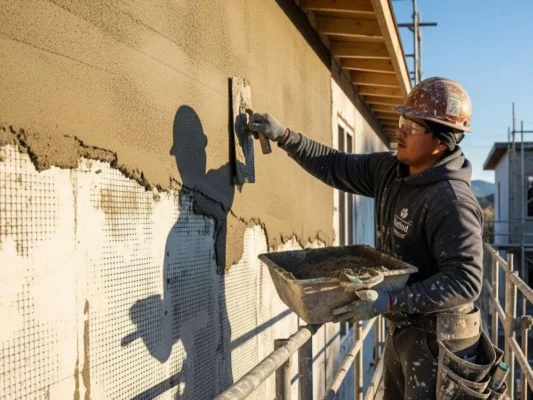
Pouring a concrete slab and applying stucco place very different demands on a cement mixture.
A slab needs to flow into a form and cure into a strong, uniform mass. Stucco has to spread evenly across a vertical surface, bond tightly to the material underneath, and resist water penetration through a relatively thin layer.
3D construction printing introduces another challenge. The mixture must flow smoothly through a nozzle, then hold its shape immediately after being deposited. Each new layer must support the weight of the next while the material continues to cure.
In both applications, workability and cohesion matter just as much as the final strength of the material. This is why Argo’s early testing looked beyond compressive strength to examine consistency, bonding, and water resistance.
What Argo Actually Tested
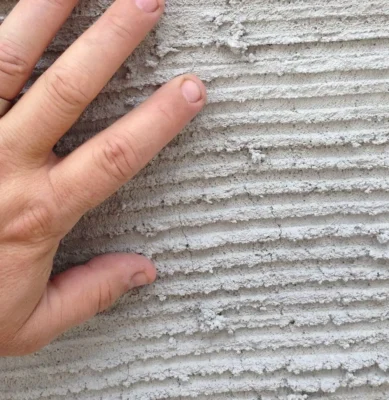
Argo blended its graphene additive directly into a cement-based scratch coat mixture, the base layer applied before the brown and finish coats in a stucco system.
The graphene-enhanced mixture was compared side by side with a conventional cement formulation containing no graphene. Argo then assessed how each mixture behaved during mixing and application before evaluating the cured scratch coat for bonding characteristics and water resistance.
What the Early Results Showed
The initial observations were positive across several aspects of the stucco application. Rather than focusing only on compressive strength, the testing looked at how the material handled during application and performed after curing.
01. Better Consistency and Spreadability
During application, the graphene-enhanced mixture handled more consistently than the standard formulation, with no issues encountered during mixing or placement.
For stucco, consistent spreadability matters because uneven application can create weak spots that may lead to cracking or poor adhesion in the layers applied afterward.
02. Stronger Bonding and Surface Density
Argo reported stronger bonding characteristics with the graphene-enhanced mixture, along with a noticeably denser surface compared with the conventional control.
A denser surface may indicate fewer internal gaps through which moisture and air can move over time.
03. Improved Water Resistance
After an appropriate curing period, water did not fully penetrate through the graphene-enhanced scratch coat under the test conditions, while it did penetrate the conventional control.
This observation is consistent with the potential of graphene-enhanced cement to create a denser structure with lower permeability.
04. Early-Stage Testing
These findings are preliminary and qualitative. Argo has not yet published specific percentage improvements or a complete set of performance measurements for this application.
Further testing is needed to understand how the material performs over longer periods and under different environmental conditions.
What’s Still Being Tested
Argo has emphasized that the current results represent an early evaluation rather than a completed performance study.
The company is continuing to monitor several performance factors, including:
- Curing behaviour and strength development over time.
- Freeze-thaw resistance.
- Performance under accelerated wind and heat exposure.
- Surface strength development.
- Compatibility with the brown and finish coats applied over the scratch coat.
- Longer-term crack resistance and structural durability.
These results have not yet been fully published, so the early observations should be viewed as promising initial findings rather than a complete performance assessment.
Why This Matters for 3D Construction Printing
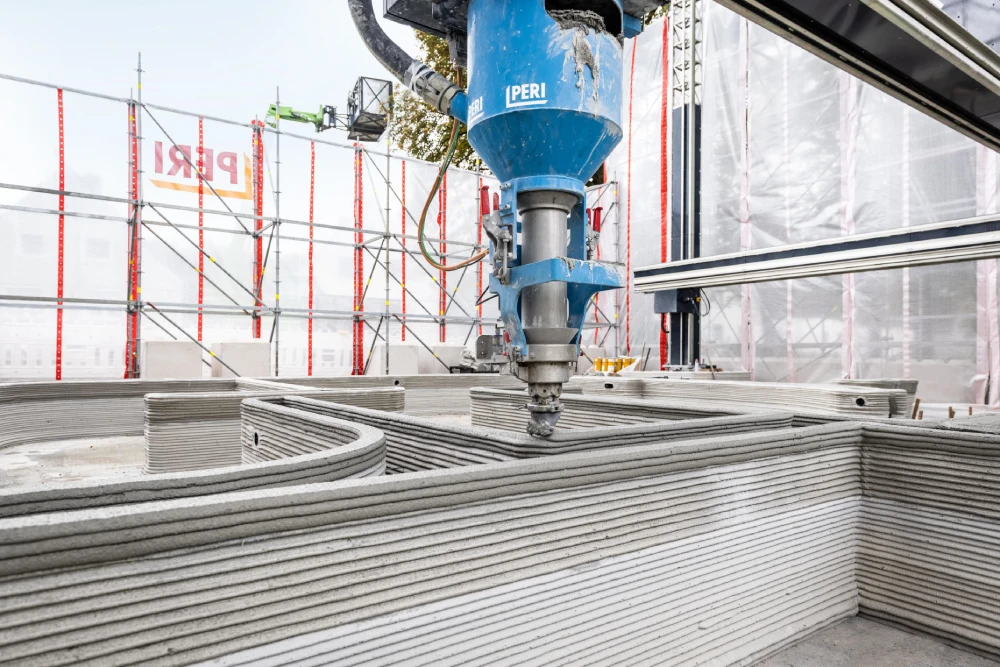
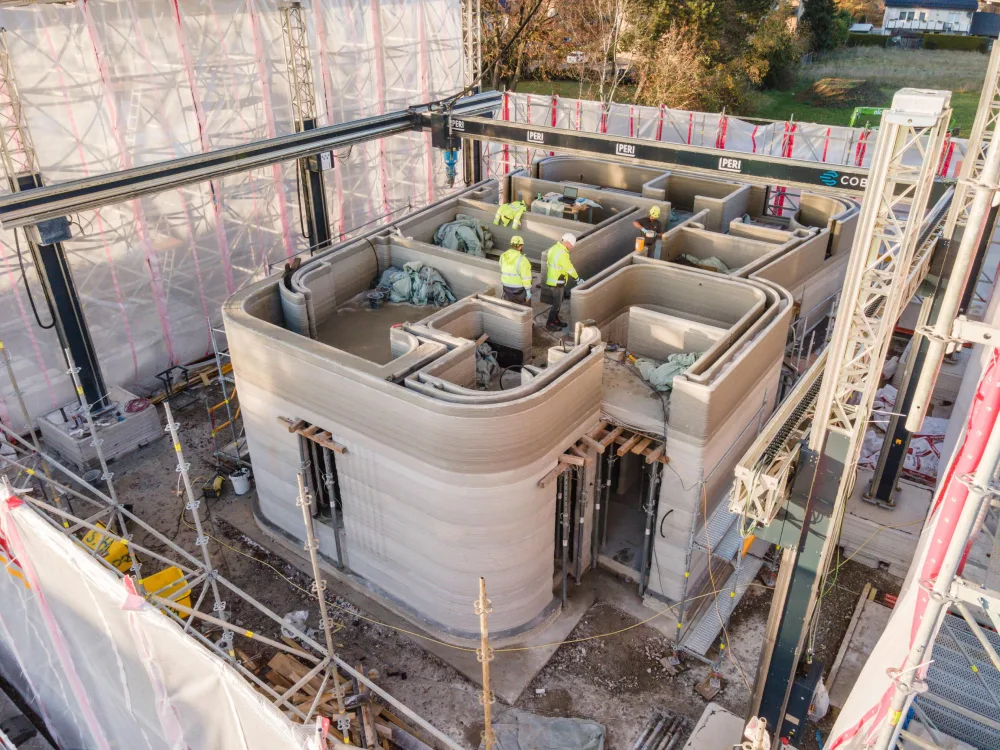
3D construction printing is an emerging area of the building industry, offering the potential for faster and less labour-intensive ways to construct walls and structures.
According to Grand View Research, the global 3D printing construction market was estimated at approximately US$53.9 million in 2024, with forecasts projecting significant growth through 2030.
The technology depends on a cement mixture that can perform several jobs at once: pump smoothly, flow consistently, hold its shape immediately after printing, and cure into a strong, durable structure.
Argo believes graphene’s potential effects on mechanical strength, density, crack resistance, and water resistance could help address some of these competing requirements.
This application remains under evaluation. Argo has not yet published specific test results for graphene-enhanced 3D printing cement formulations.
What This Means if You Work With Stucco or 3D-Printed Concrete
For stucco contractors, the early findings point toward a cement mixture that may handle more consistently and offer better water resistance at the scratch coat stage.
For those working in 3D construction printing, graphene is being explored as one possible way to improve the balance between flow, cohesion, and final material performance.
Neither application should be considered a commercially proven graphene cement product based on the current testing. The results are worth watching, but further data is needed before changing project specifications or material selection.
Questions About Argo’s Stucco and 3D Printing Tests
No. The results reported so far are qualitative observations: better consistency, denser surface, improved bonding, and better water resistance, rather than specific percentage figures. Argo has said it will continue testing and collecting data.
Not commercially, based on what has been published. This is an early testing program, and Argo has described the results as preliminary rather than final.
Argo is evaluating that application based on the properties graphene has shown elsewhere, but it has not published test results specific to 3D printed cement mixes yet. That work is described as ongoing.
Argo’s concrete slab tests, including its Bristol, Tennessee pour, focused on measurable compressive strength. This stucco and 3D printing program looked at workability, adhesion, and water resistance instead, since those properties matter more for a thin surface coat or a printed layer than for a poured slab.
Stucco is applied in relatively thin layers over a surface that must withstand exposure to moisture. Better resistance to water penetration may help protect the underlying materials and support longer-term durability.
The Bottom Line
Argo’s early stucco tests suggest that graphene-enhanced cement can offer improved consistency during application, stronger bonding, a denser surface, and better resistance to water penetration compared with a standard mix.
The company is also exploring how the same graphene dispersion technology could support cement formulations for 3D construction printing, where flow, cohesion, and structural performance must work together.
Both applications are still in the evaluation stage. While the initial observations are encouraging, further testing and published performance data will be important in establishing their commercial potential.
Building Stronger.
Smarter Infrastructure with Graphene