



Discover how graphene can improve concrete strength, reduce permeability, and support more durable infrastructure.
Key Findings
24.35%Strength Increase
Reported increase above design strength at 56 days.
60%Laboratory Results
Reported strength increase in a separate test.
0.01–0.5%Typical Dosage
Graphene dosage by weight of cement.
DurabilityPerformance Potential
Potential to reduce permeability and improve durability.
The Short Version
Graphene concrete is standard concrete mixed with a very small amount of graphene or graphene oxide, usually less than half a percent of the cement weight. That tiny addition changes how the concrete hardens, giving it a denser structure with fewer gaps for water and salt to get through. The result is concrete that is stronger, lasts longer, and often needs less material to do the same job.
- Graphene is added in small amounts, typically 0.01% to 0.5% by weight of the cement.
- It works by giving the concrete more places to build strong bonds while it hardens.
- An Oct. 17, 2025, test pour in Bristol, Tennessee, USA showed a 24.35% jump in compressive strength after 56 days.
- A separate lab test showed a 60% increase in strength with just 0.05% graphene oxide.
- Denser concrete means less exposure to water damage, less rebar rust, and often a smaller carbon footprint.
The Problem With Standard Concrete
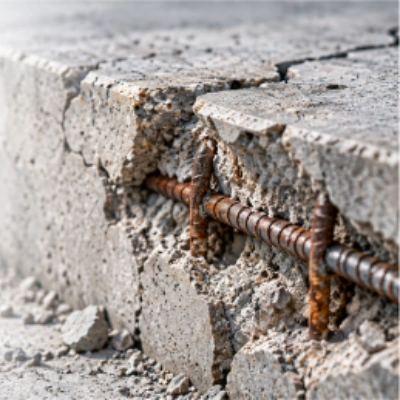
Concrete is the most used building material on Earth, and for good reason. It is affordable, it holds up under pressure, and it lasts. But it has always had two big weaknesses. It can be brittle, and it is not always as tight as it looks.
When cement hardens, it often does not form a perfect, solid block. It actually forms a microscopic maze full of tiny gaps. Those gaps let water, chloride, and other chemicals sneak inside. Over the years, that moisture reaches the steel rebar, causing it to rust and expand, which in turn cracks the concrete from the inside out.
For a long time, the only fix has been to use more: thicker slabs, more rebar, more cement. That costs money, adds weight, and increases the carbon footprint of every project. Graphene offers a different approach. Instead of adding bulk, it changes the concrete’s internal structure.
What Graphene Concrete Actually Is
Graphene is a single layer of carbon atoms arranged in a honeycomb pattern, so thin it is measured at the scale of atoms. Despite that, it is remarkably strong, about 100 to 300 times stronger than steel by weight, and it conducts electricity well. On its own, graphene is not a building material. In concrete, it works as an additive. Manufacturers mix a small amount of graphene oxide, which is graphene combined with oxygen, into water and add it to the batch at the plant.
The dose is small, usually 0.01% to 0.5% of the cement’s weight. That is a small enough amount that it does not change how the concrete is placed or finished. What it does change is the chemistry happening inside the mix.
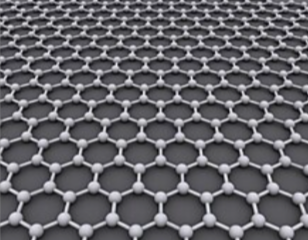
How Graphene Makes Concrete Stronger
When cement and water combine, they form a compound called calcium silicate hydrate, or C-S-H for short. This is the actual glue that holds the sand and gravel together in your concrete. In a standard mix, C-S-H crystals grow somewhat randomly, leaving gaps behind. Graphene changes that process in four specific ways.
01. Nucleation Effect
Graphene has a huge surface area for its size. That gives C-S-H crystals more places to start forming, so more of the cement actually reacts instead of sitting unused in the mix. Engineers call this the nucleation effect.
02. Reduced Pore Connectivity
Graphene sheets are small enough to fit within the tiny pores that would otherwise remain open. By physically blocking some of those gaps, graphene reduces the pathways water and chloride would normally use to get in.
03. Additional C-S-H Formation
Graphene oxide has chemical groups on its surface that react with leftover calcium hydroxide, a byproduct of hydration that does not add much strength on its own. That reaction produces more C-S-H, the material that actually does the binding.
04. Microcrack Control
Because graphene is strong and flexible at a microscopic scale, it can bridge tiny cracks before they widen into visible ones. It works on a similar idea to steel fibre reinforcement, just at a much smaller scale.
Put together, these four effects build a denser, more uniform structure with far fewer capillary gaps. That is what shows up in testing as higher strength and lower permeability.
How Graphene Gets Into the Mix
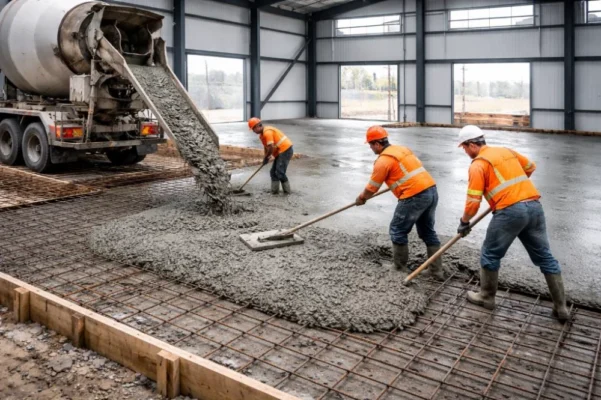
Graphene usually arrives at the batch plant as a liquid, graphene oxide suspended in water, and gets added the same way other admixtures do. No special equipment is needed. Because the dose is so small, it does not change the basic proportions of your mix design.
Graphene concrete can look drier than a standard batch. That’s even when it is not, simply because the mix is denser. Don’t add extra water on site to compensate. Beyond that, placement, finishing, and curing all follow the process you already know.
Graphene Concrete vs. Standard Concrete
| Property | Standard Concrete | Graphene Concrete |
|---|---|---|
| Strength | 4,000 psi typical design mix | Up to 24.35% higher at 56 days in a real test pour; up to 60% higher in laboratory testing at a 0.05% graphene oxide dose. |
| Durability | More capillary gaps; higher water and chloride ingress over time. | Denser structure with lower permeability, which reduces rebar corrosion risk. |
| Crack Resistance | Relies on rebar and control joints to manage cracking. | Graphene bridges micro-cracks at a microscopic scale before they widen into visible cracks. |
| Material Use | Full cement content required to hit the target strength. | Potential to reduce cement content while meeting the same strength target. |
The exact numbers vary by dosage and how well the graphene is mixed in, which is why the range above spans both a real project pour and controlled lab testing. Both point in the same direction: a denser, less porous concrete that can do more with less material.
Where You Can See It Working Today
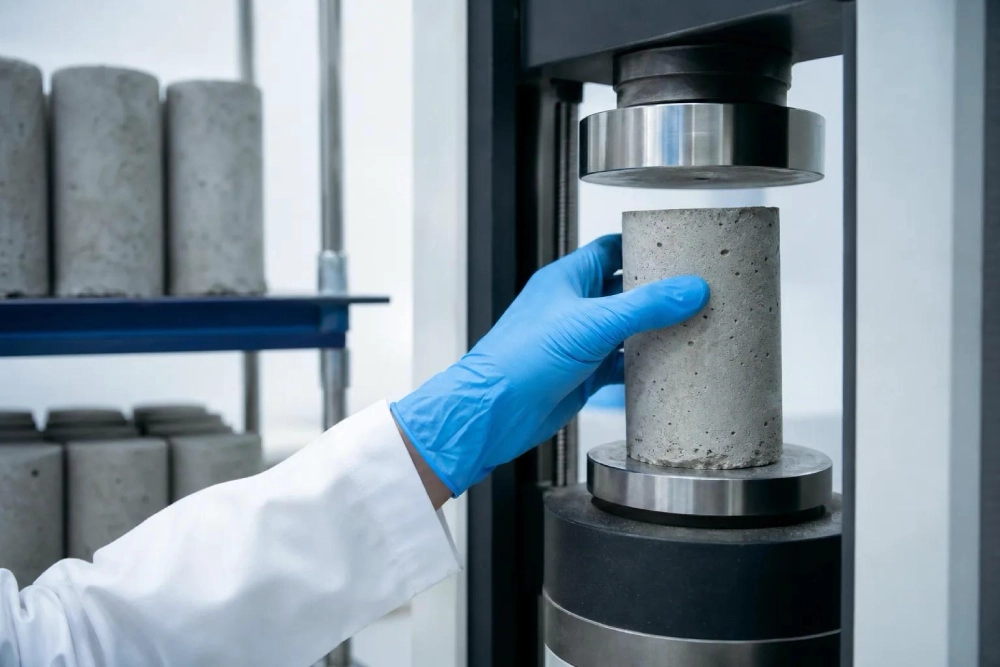
Argo Graphene Solutions poured its first graphene-infused concrete slabs in Bristol, Tennessee, in October 2025, three on-grade slabs totalling 12.5 cubic meters. Independent testing under the ASTM C39 standard recorded 3,428 psi at 7 days, 4,449 psi at 28 days (an 11% increase over the 4,000 psi design mix), and 4,974 psi at 56 days (a 24.35% increase). In a separate test, Argo measured a 60% jump in compressive strength using just 0.05% graphene oxide by weight, a result that held up across multiple independent test batches.
Beyond concrete slabs, researchers are also looking at graphene for marine structures, where lower permeability directly protects against rebar corrosion, and for uses that take advantage of graphene’s conductivity, like de-icing systems and structural sensors that can detect damage before it is visible.
What Graphene Concrete Can’t Do Yet
Graphene concrete is promising, but it is not a finished product yet, and it helps to be honest about that.
- Field history is still short. Most public data comes from individual test pours, not years of buildings and roads holding up in the real world.
- Graphene sheets naturally clump together in water, so getting an even mix at large scale takes real technical care.
- The admixture costs more per unit than standard additives, though savings on cement or slab thickness can offset that.
- Most building codes do not have a specific standard for nanomaterial admixtures yet, so approval on public projects often happens case by case.
What’s Next for Graphene Concrete
Graphene concrete is likely to move more and more from pilot projects to industry-standard specifications, as more test pours begin to publish full 28-day and 56-day results more often. As mixing methods continue to improve, large-scale infrastructure work, where lifecycle cost and durability matter most, is likely where that shift will happen first.
Why Contractors Are Choosing Graphene Concrete Solutions
Graphene concrete is likely to move more and more from pilot projects to industry-standard specifications, as more test pours begin to publish full 28-day and 56-day results more often. As mixing methods continue to improve, large-scale infrastructure work, where lifecycle cost and durability matter most, is likely where that shift will happen first.
Questions About Graphene Concrete
The admixture itself costs more upfront. But because it can reduce how much cement or how thick a slab needs to be, total project costs often come out lower.
Yes. The graphene is suspended in a water-based liquid and mixed directly into the batch, so crews never have to handle loose nanoparticles.
Usually between 0.01% and 0.5% of the cement weight. That is a small amount, but it is enough to change how the mix hardens.
No. You place, finish, and cure it the same way as standard concrete. The only real change happens at the batch plant.
Diversified Materials Testing LLC tested cylinder samples under ASTM C39 on a real-world test pour in Bristol, Tennessee, which showed a 24.35% strength increase over the design mix at 56 days.
A separate lab test measured a 60% increase at a much lower dose, and that result repeated across multiple batches.
Graphene concrete is not a new kind of cement. It is a small addition that changes how the same cement hardens, giving it more room to build a denser, tighter structure. That shows up as higher strength, lower permeability, and in some cases, less material needed overall.
The science behind it is well-documented, and real-world test data, such as the Bristol, Tennessee pour and others, back it up at the project scale. It is still early days for widespread use, but for anyone planning their next pour, both the chemistry and the early numbers are pointing the way.
The Bottom Line
Graphene-enhanced concrete offers a promising approach to improving material performance through carefully engineered additives.
As research and field testing continue, graphene technology may create opportunities for stronger, more durable, and more resource-efficient construction materials.
Building Stronger.
Reducing Material Impact.
Application – Phase I