

If you are pricing out your next pour, you have probably run into graphene concrete somewhere in your research, and probably a claim or two that made you raise an eyebrow. Is it really stronger? Does it actually save money, or does the higher sticker price just eat any gains you’d get from using less material?
This guide compares the real numbers behind cost, strength, and durability so you can decide which option makes sense for your project.
Key Findings
$135-$195Traditional Concrete
Typical US national average price per cubic yard in 2026.
5-10×Admixture Cost
Estimated cost premium for graphene admixtures compared with conventional additives.
24.35%Strength Increase
Reported compressive strength increase at 56 days in a real test pour.
$276BAnnual Corrosion Costs
Estimated annual US corrosion costs across infrastructure and industry in a 2002 federal study.
The Short Answer
Traditional concrete costs less upfront, usually $135 to $195 per cubic yard in 2026, and it is available from almost any ready-mix plant today. Graphene concrete costs more per unit; current estimates put graphene admixtures at 5 to 10 times the price of standard additives. However, it may reduce the amount of cement or the number of slabs needed for certain applications.
For small residential jobs, traditional concrete is still the practical choice. For projects where durability and lifecycle cost matter more than the upfront bill, graphene concrete is worth a closer look.
- Traditional concrete: $135 to $195 per cubic yard, US national average for 2026.
- Graphene concrete: No fixed retail price yet, since it is still an emerging product. Current estimates put graphene admixture costs at 5 to 10 times those of standard additives.
- Strength: A real test pour in Bristol, Tennessee, measured a 24.35% compressive strength increase over the design mix at 56 days.
- Laboratory results: A separate lab test found a 60% strength increase using only 0.05% graphene oxide by weight.
- Corrosion: A 2002 federal study estimated corrosion costs across US infrastructure and industry at $276 billion annually, with rebar corrosion in concrete structures among the contributing problems.
Upfront Cost: What You Actually Pay
Traditional Concrete
Traditional concrete has a clear, well-established price. The national average for ready-mix concrete in 2026 runs between $135 and $195 per cubic yard, depending on your region and the strength you order. You can get a quote from almost any batch plant in the country today.
Graphene Concrete
Graphene concrete does not have the same standardized pricing yet. It is still an emerging product, and most suppliers set prices case by case, project by project.
Research indicates that the graphene admixture itself can cost significantly more than standard additives. One academic review put the added cost at 5 to 10 times that of conventional concrete on a per-unit basis.
That sounds steep, but it needs context: the admixture is only one part of the total mix cost, and it is added in tiny amounts, usually 0.01% to 0.5% of the cement weight, rather than replacing another ingredient on a one-to-one basis.
Graphene Concrete vs. Traditional Concrete: Side by Side
The differences go beyond the initial price. Strength, durability, material requirements, and availability all affect which mix makes sense for a project.
| Factor | Traditional Concrete | Graphene Concrete |
|---|---|---|
| Cost per cubic yard | $135 to $195, US national average in 2026. | No standard retail price yet. Graphene admixtures can carry an early-adopter premium that may ease as production scales up. |
| Compressive strength | 4,000 psi typical design mix. | Up to 24.35% higher at 56 days in a real test pour; up to 60% higher in laboratory testing at a 0.05% graphene oxide dose. |
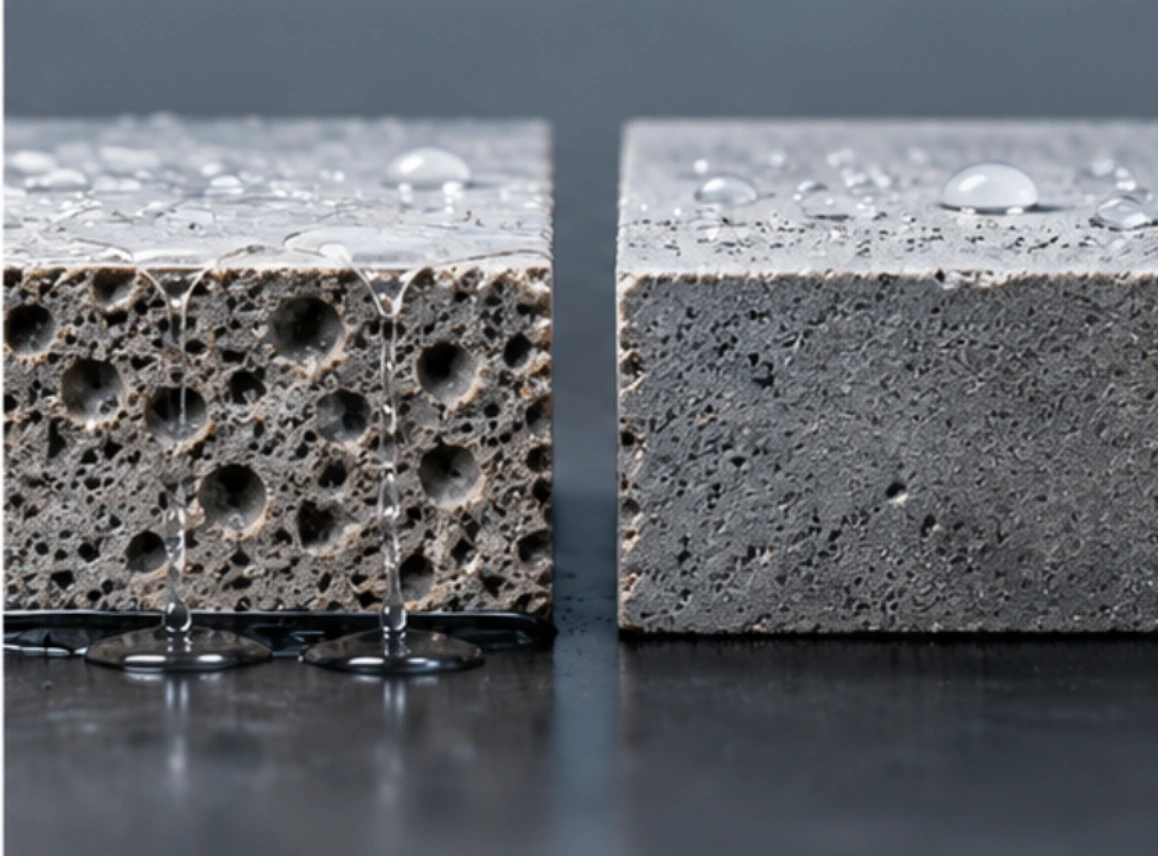
| Durability | More capillary gaps, allowing greater water and chloride ingress over time. | A denser structure with lower permeability, which may reduce rebar corrosion risk. |
| Material needed | The cement content required to meet the target strength. | Potential to reduce cement content while meeting the same strength target, depending on the mix design and application. |
| Availability | Available from almost any ready-mix plant today. | Availability remains limited to specific suppliers and pilot projects as the technology commercializes. |
Where the Long-Term Savings Actually Come From
The upfront price only tells part of the story. Graphene changes the internal structure of concrete while it hardens, and that may affect three areas that matter for your budget over time.
01. Less Material for the Same Strength
Because graphene concrete can achieve higher strength at the same or lower cement content in some formulations, certain projects may be able to use less material overall. That could mean less cement per cubic yard or a thinner slab designed to meet the same load requirements.
This is one way the higher admixture cost may begin to balance out.
02. Lower Repair Costs From Corrosion
Rebar corrosion is one of the expensive problems in concrete construction. Water and chloride can enter the tiny gaps inside conventional concrete, reach the steel reinforcement, and cause it to rust and expand, cracking the concrete from the inside out.
A 2002 federal study estimated corrosion costs across US infrastructure and industry at $276 billion a year. Graphene concrete’s denser structure may reduce the permeability that contributes to this problem, potentially lowering repair needs over the life of a structure.
03. Fewer Callbacks and Less Downtime
Improved crack resistance and durability may mean fewer warranty issues and repair calls after a project is completed. For contractors and owners, avoiding repeat work and downtime can matter as much as the initial invoice.
What You’re Trading Off
None of this makes graphene concrete a clear win for every project. It is worth being upfront about the trade-offs before deciding whether to use it.
- Pricing is not standardized yet. Budgeting for a graphene mix takes more upfront coordination with your supplier than ordering a standard mix.
- Availability is limited. You cannot order graphene concrete from every ready-mix plant the way you can standard concrete.
- Long-term field data is still developing. Much of the public performance data comes from individual test pours and laboratory studies, rather than decades of buildings and roads in service.
- Approvals may take extra time. Many building codes do not yet have a specific standard for nanomaterial admixtures, so approval for public projects may need to be assessed case by case.
Which One Makes Sense for Your Project?
The right choice depends on project size, exposure conditions, expected service life, and the cost of future maintenance.
Traditional Concrete
For a small residential job, such as a driveway, patio, or sidewalk, traditional concrete is still the practical choice. It is widely available, pricing is predictable, and the additional durability offered by graphene may not justify the extra coordination required to source it for a small pour.
Graphene Concrete
For larger or longer-life projects, such as infrastructure, marine structures, or structures exposed to heavy chloride or freeze-thaw cycles, the calculation may change. These are the applications where lower permeability and reduced corrosion risk could offer the greatest value, because repair costs and service life have a larger impact on total cost of ownership.
Your Questions About Graphene Concrete Costs, Answered
It depends on the project. For a small job with a short service life, the extra cost may be difficult to justify. For larger or longer-life projects where durability and repair costs matter more, potential savings on material and maintenance may outweigh the higher admixture price. A project-specific cost analysis is needed to determine whether it pays off.
There is no fixed retail price yet, but current estimates put the graphene admixture itself at 5 to 10 times the cost of standard additives. The admixture is only one part of the total project cost, however, and potential savings on cement or slab thickness may offset part of the difference in suitable applications.
Not in most areas yet. Availability is currently limited to specific suppliers and pilot projects as the technology moves toward wider commercialization. Contact suppliers directly to confirm availability in your region.
The evidence suggests potential advantages for larger and longer-life projects, particularly through lower permeability and reduced rebar corrosion risk. Corrosion is one of the recurring costs associated with concrete infrastructure. However, there is not yet enough long-term field data to establish an exact payback period for every application.
The Bottom Line
Traditional concrete wins on upfront cost and availability, and for most everyday jobs, that is exactly what you need. Graphene concrete costs more per unit today, but it may change the durability equation in ways that matter over the life of a structure, especially where corrosion, cracking, or material volume drive long-term costs.
The right choice comes down to how long the structure needs to last, the conditions it will face, and how much repair and maintenance contribute to the total project cost.
Conclusion
Whether you choose traditional concrete or graphene oxide concrete depends on your project’s priorities. However, the long-term value of graphene concrete additives and high-strength, sustainable concrete is becoming harder to ignore.
If you are comparing graphene concrete with traditional concrete or wondering whether graphene concrete is worth the cost, explore Argo’s articles on what graphene concrete is and how it works, how STREAM™ Graphene Technology operates, and the comparison of the Argo design mix with real-world test results to learn more about how the technology is being evaluated in real-world applications.