


Most articles about graphene concrete jump straight to strength numbers and skip the material itself. Where does the graphene actually come from, and what does it look like before it ever touches a bag of cement? Argo’s graphene is produced through STREAM, a proprietary platform licensed exclusively from Grapherry. Here is what that process involves, what the finished material measures out to under a microscope, and how it makes its way into an actual concrete mix.
Key Findings
1. Two Output Materials
STREAM produces both graphene (STREAM-G) and graphene oxide (STREAM-O).
2. Few-Layer Structure
Grapherry’s published data describes graphene roughly 1 to 5 layers thick.
3. High Carbon Purity
The material has carbon purity above 95%, with oxygen content below 5%.
4. Low-Dosage Application
Argo’s cement testing used graphene oxide at approximately 0.05% of cement weight.
The Short Answer
STREAM is a production platform, developed by Grapherry and its founder Dr. Vikas Berry, that converts carbon-rich feedstocks into graphene and graphene oxide.
Grapherry’s published material data describes the resulting graphene as a few-layer, high-purity powder with a large surface area, confirmed through Raman spectroscopy, X-ray photoelectron spectroscopy, and X-ray diffraction.
Once produced, the graphene oxide version is dispersed in water and added to a cement batch in very small amounts, typically around 0.05% of the cement weight.
At a Glance
- STREAM supports two output materials: STREAM-G graphene and STREAM-O graphene oxide.
- Grapherry’s published data describes the graphene as roughly 1 to 5 layers thick, with carbon purity above 95%.
- The material has a lateral sheet size of roughly 1 to 5 microns and low oxygen content, under 5%.
- Raman, XPS, and XRD testing all point to the same conclusion: a low-defect, high-purity, few-layer graphene.
- The graphene oxide form is added to cement as a liquid dispersion at a very low dosage, around 0.05% of the cement weight in Argo’s testing.
What STREAM Actually Is
STREAM is a graphene production platform developed by Grapherry, Inc. and Dr. Vikas Berry, Grapherry’s founder, and licensed exclusively to Argo.
The platform is designed to convert carbon-rich feedstocks into graphene materials while addressing the problems that have historically slowed graphene from becoming a mainstream industrial material: getting the process to scale, keeping the output consistent from batch to batch, and making the manufacturing efficient enough to be commercially viable.
STREAM produces two distinct materials. STREAM-G is graphene in its more standard form, and STREAM-O is graphene oxide, the version used in Argo’s cement testing. Having both gives Argo flexibility to pursue different applications rather than building the whole business around a single product.
What the Finished Material Actually Looks Like
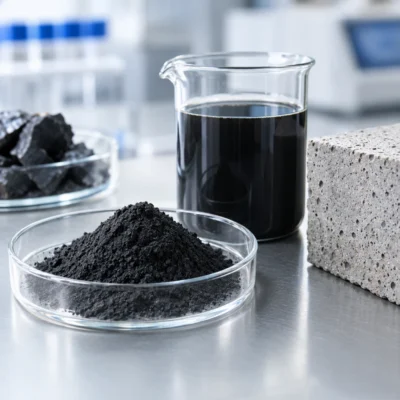
Grapherry publishes a technical data sheet describing the graphene this process produces. It comes out as a fluffy, black, dry powder.
Under characterization, the material measures out to roughly 1 to 5 layers thick, well within the range considered few-layer graphene. Carbon purity runs above 95%, made up predominantly of sp2 carbon, the strong, stable form of carbon bonding that gives graphene its properties.
Oxygen content stays under 5%, meaning minimal surface functionalization on the base graphene material. The sheets themselves measure roughly 1 to 5 microns across, and the stacking pattern is described as turbostratic, meaning the layers are rotated relative to each other rather than perfectly aligned, which is typical of high-quality few-layer graphene made this way.
How Scientists Confirm What They’ve Made
You cannot check graphene quality by looking at it. Confirming layer count, purity, and structure takes specialized testing, and Grapherry’s data sheet lays out results from three of the standard methods used across the graphene industry.
Raman Spectroscopy
Raman testing shines a laser on the material and reads the light that bounces back. The graphene showed a strong G peak, which confirms the sp2 carbon structure, and a well-defined 2D peak, which confirms a layered structure.
The ratio between those peaks landed in the range expected for few-layer graphene, and a very low ratio on a separate defect-related peak pointed to minimal structural defects and high crystallinity overall.
X-ray Photoelectron Spectroscopy (XPS)
XPS testing reads the chemical bonds on the material’s surface. The results showed a dominant signal matching sp2-bonded carbon, confirming a graphitic structure, along with only small signals from oxygen-containing bonds.
That combination points to a high-purity, mostly unmodified graphene surface rather than one that has been heavily chemically altered.
X-ray Diffraction (XRD)
XRD testing looks at how the material’s atomic structure scatters X-rays. A dominant peak in the pattern confirmed a layered carbon structure with few-layer stacking and few crystalline impurities, backing up what the Raman and XPS results already showed.
Taken together, these three tests describe the same material from three different angles: a low-defect, high-purity, few-layer graphene, which is what you want going into a cement mix where consistency matters as much as the material itself.
From Feedstock to Cement Additive: How It Gets Into Concrete
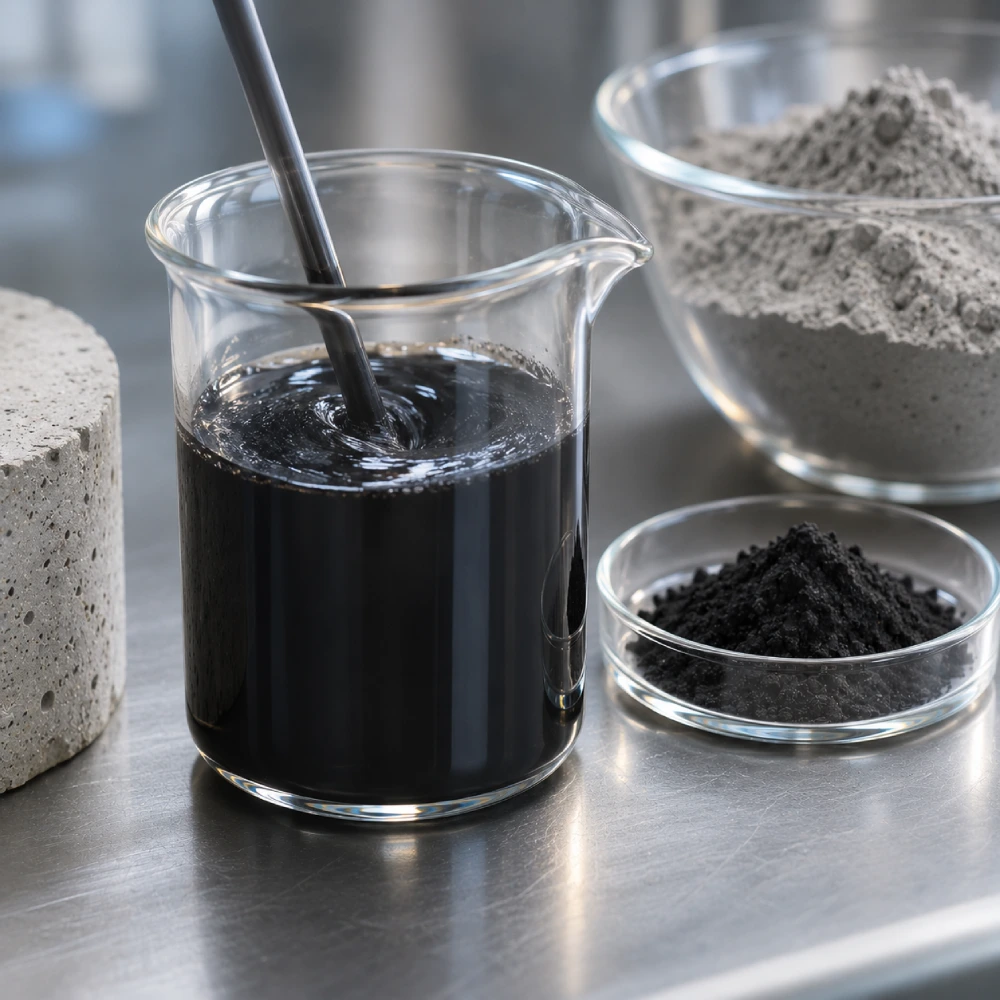
Once STREAM produces the graphene oxide, it gets dispersed in water to create a liquid additive. That liquid is what actually shows up at a cement plant or lab.
In Argo’s testing, the graphene oxide was added at just 0.05% of the cement weight, roughly five parts graphene oxide per ten thousand parts cement, using standard ASTM test cylinders cured for seven days.
At that dosage, Argo measured a 60% increase in ultimate compressive strength compared with a control mix with no graphene added, a result the company reproduced across multiple independent test batches.
That number is what most coverage of Argo focuses on, but it depends entirely on the material quality described above. A batch with inconsistent layer count or excess defects would not perform the same way twice, which is exactly the kind of variability STREAM is designed to remove.
Why the Material Science Matters for Performance
Graphene’s effect on cement comes down to surface area and structure.
A few-layer sheet has far more surface area per gram than a thicker, multi-layer flake, which gives cement hydration products more places to form and bond. High purity and low defect density mean the material behaves predictably batch after batch, which matters when you’re dosing at 0.05% and need that small amount to do the same job every time.
This is the connection between the material data in this article and the strength numbers reported elsewhere: the performance results depend on the graphene actually being what the characterization data says it is.
Few-Layer Structure
Roughly 1 to 5 layers thick.
High Purity
Carbon purity above 95%.
Low-Dosage Addition
Approximately 0.05% of cement weight in Argo’s testing.
Your Questions About STREAM and Argo’s Graphene Supply, Answered
STREAM-G produces graphene, while STREAM-O produces graphene oxide. Argo’s cement testing has used the graphene oxide form, since its surface chemistry works well as a cement additive.
Through a combination of tests. Raman spectroscopy checks layer count and defect level, X-ray photoelectron spectroscopy checks surface chemistry and purity, and X-ray diffraction checks the overall layered structure. Together they confirm what the material actually is, not just what it’s claimed to be.
A very small amount. Argo’s testing used 0.05% of the cement weight, delivered as a graphene oxide dispersion in water rather than a dry powder added directly to the mix.
The graphene is produced through STREAM, a platform developed by Grapherry, Inc. and licensed exclusively to Argo. Argo uses the material in its own construction testing programs.
STREAM-G produces graphene, while STREAM-O produces graphene oxide. Argo’s cement testing has used the graphene oxide form, since its surface chemistry works well as a cement additive.
The Bottom Line
Behind every strength number Argo reports is a material with its own detailed specification: few layers thick, high carbon purity, low defect density, and a consistent sheet size, all confirmed through Raman, XPS, and XRD testing.
That consistency is what STREAM is built to deliver, and it’s what makes it possible to add graphene oxide to cement at a dosage as small as 0.05% and still get a reliable, repeatable result.
Conclusion
Every strength number Argo reports rests on graphene that’s actually few-layer, high-purity, and consistent batch-to-batch. See how Argo’s new test program will aim to discover how graphene functions under harsh conditions in the Saskatchewan cold-weather tests and the full mechanism behind how graphene concrete works.

Explore the Science Behind Graphene-Enhanced Concrete
Discover how Argo’s graphene technology is being evaluated in concrete applications, from material characterization to performance testing.