


Every driver in a cold climate knows the feeling of hitting a pothole that wasn’t there last fall. Roads that look fine in September are cracked and crumbling by March.
That isn’t bad luck or bad construction, most of the time. It’s what happens to standard asphalt every winter. Argo Graphene Solutions is testing a graphene-infused asphalt mix aimed at the exact mechanisms behind that failure.
Here is how cold weather actually breaks down a road, and what Argo is testing to address it.
Key Findings
- Asphalt binder becomes brittle in extreme cold, making it more vulnerable to cracking.
- Water entering cracks and freezing is one of the main ways small cracks develop into potholes.
- Pothole-related vehicle repairs cost U.S. drivers an estimated $26.5 billion annually.
- Argo is testing graphene-infused asphalt against three specific failure points: cold-weather durability, freeze-thaw resistance, and thermal conductivity.
- The testing is still underway. Argo has not published performance results from its asphalt program.
The Short Answer
Cold-weather roads fail through a fairly predictable sequence: the asphalt binder becomes brittle in extreme cold, small cracks form, water gets into those cracks, and freeze-thaw cycles widen them into potholes.
Argo is testing a graphene-infused asphalt mix at its Saskatchewan facility aimed at three parts of that sequence: cold-weather durability, freeze-thaw resistance, and thermal conductivity that could help prevent ice from forming in the first place.
No performance results have been published yet.
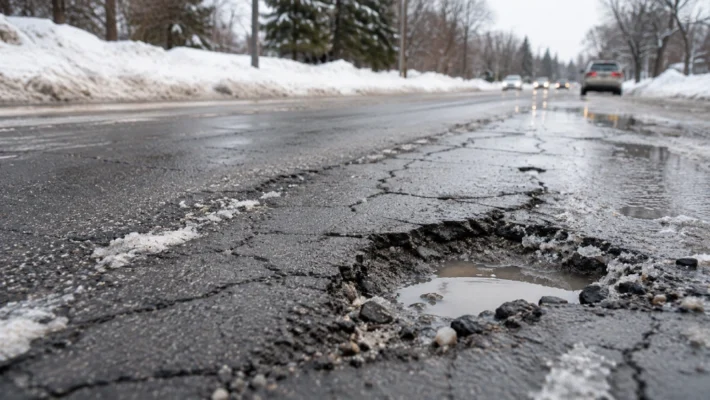
How Cold Weather Actually Breaks Down a Road
Asphalt failure in cold climates is not one problem. It’s a chain of three, and each one sets up the next.
It starts with the binder becoming brittle. Cracks then allow water to enter the pavement, where freezing and expansion gradually make the damage worse. Separately, ice forming on the road surface creates an immediate safety concern.
Understanding this sequence helps explain what Argo’s current testing is designed to investigate.
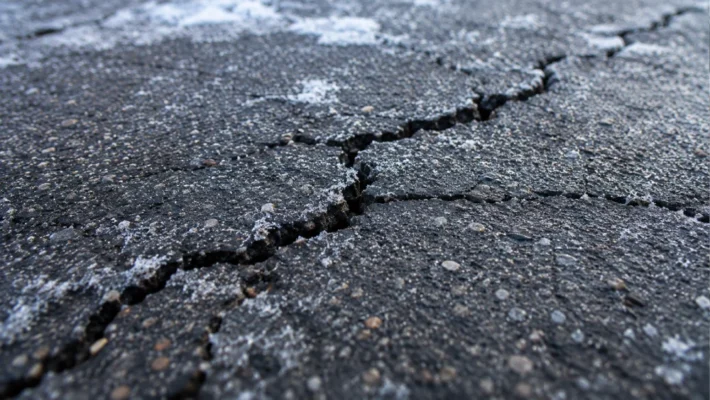
1. The Binder Gets Brittle
Asphalt is a mix of aggregate held together by bitumen, a petroleum-based binder. Bitumen behaves like a flexible material at normal temperatures, but below a certain point, often cited around -15°C, it shifts into a brittle state.
Once that happens, the binder can no longer absorb the stress created as the pavement contracts in the cold, and small cracks start to form.
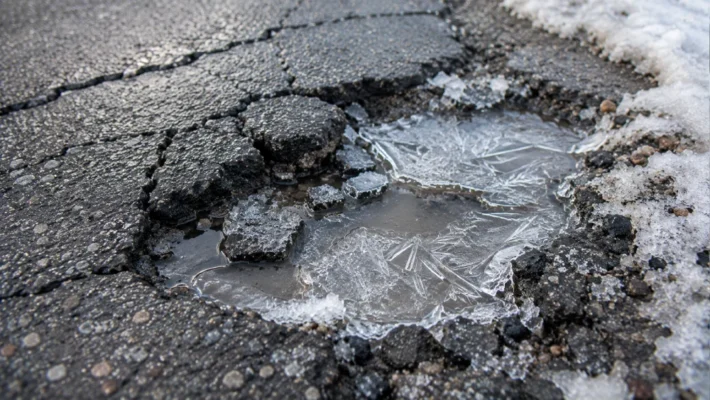
2. Water Gets In, Then It Freezes
Once cracks exist, water finds its way into them. When that water freezes, it expands, and expansion inside a crack pushes it wider.
Repeat that cycle enough times over a winter, and a hairline crack turns into a much larger one.
Water can also get underneath the pavement entirely, weakening the base material. When traffic drives over it, the surface can break apart. That’s how a pothole actually forms.
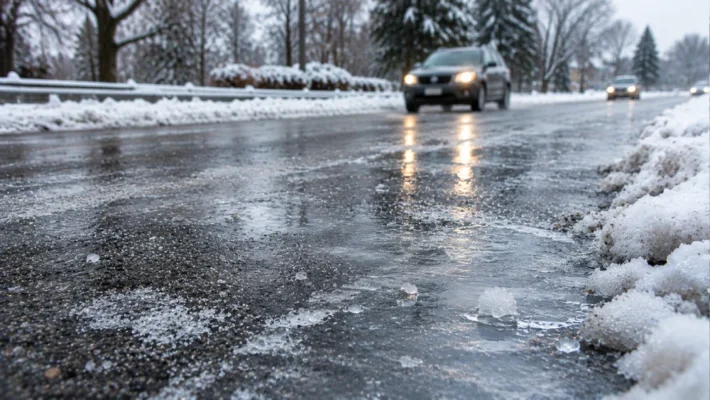
3. Ice on the Surface Creates a Different Kind of Problem
Separate from structural damage, ice forming on the road surface is a direct safety issue.
This isn’t about the pavement breaking down over time. It’s about what happens the moment someone drives or walks across it.
Slippery road surfaces create hazardous conditions, making ice prevention and de-icing another important consideration for cold-climate roads.
The Cost of Letting This Happen
This isn’t a minor inconvenience. Pothole-related vehicle repairs cost U.S. drivers an estimated $26.5 billion a year, with more than 55 million potholes currently spread across the country’s roughly 4 million miles of roadway.
Close to 40% of major roads are rated in poor or mediocre condition.
Every part of the cold-weather failure sequence — brittleness, cracking, freeze-thaw expansion, and ice — feeds into those numbers.
What Argo Is Testing to Address This
Argo’s graphene asphalt testing, underway at its research and development facility in Regina, Saskatchewan, targets the same sequence described above rather than just one piece of it.
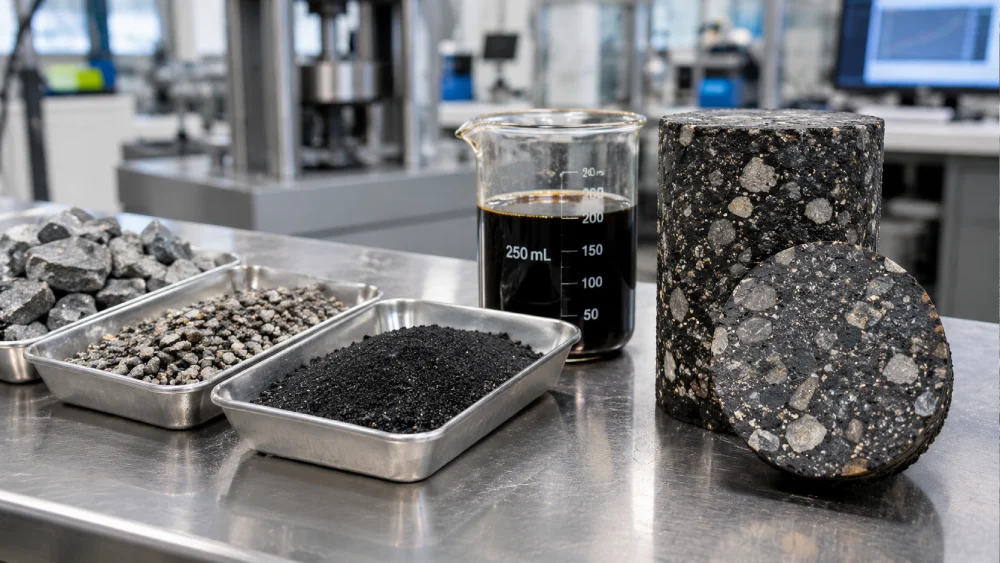
01. Structural Cold-Weather Durability
Testing tensile strength and crack resistance at low temperatures, directly addressing the brittleness that starts the failure sequence.
02. Freeze-Thaw Resistance
Testing how well the mix resists damage caused by water entering the pavement, freezing, and expanding — the step that turns small cracks into larger ones.
03. Thermal Conductivity
Evaluating whether the mix can help maintain surface temperatures that inhibit ice formation and support faster de-icing, addressing the safety side of the problem.
Why Saskatchewan?
Saskatchewan was chosen for this testing because its winters provide a genuinely harsh real-world environment.
Extreme cold and repeated freeze-thaw conditions make the province a relevant place to investigate how asphalt materials respond to the challenges faced by cold-climate roads.
Testing in this environment allows Argo to evaluate its mix against the conditions it is intended to address, rather than relying on a lab simulation alone.
Where This Stands Today
This testing phase began in January 2026 and is still underway.
Argo has stated the objectives clearly, but it has not published compressive strength figures, freeze-thaw cycle counts, or thermal performance data from this asphalt program.
The company has said the results will be used to finalize a mix design ahead of pilot projects and municipal partnerships. This means the program is a step toward a potential product, rather than a finished commercial offering.
Your Questions About Cold-Weather Road Failure, Answered
Because that’s when the freeze-thaw cycle has had all winter to widen cracks that formed earlier in the season. Repeated freezing and thawing does much of the damage before temperatures warm up enough for repair crews to fix it.
No. Argo’s testing program is ongoing, with the data collected shaping a future mix design and potentially informing a commercial product.
That’s what the current testing is meant to determine. Argo has stated the objective, but no performance results have been published yet.
The Bottom Line
Cold-weather roads fail through a predictable chain of events: brittle binder, cracking, water intrusion, freeze-thaw expansion, and ice.
That chain costs drivers billions of dollars a year and creates real safety risks that can’t be ignored.
Conclusion
Argo’s Saskatchewan testing is built around that exact sequence, not a single isolated property.
Whether graphene actually breaks the chain is still an open question, since no results have been published yet. But the testing is aimed at the key problems behind cold-weather road failure.
For a closer look at what’s happening at the facility, read Inside Argo’s Saskatchewan Lab Testing. For the material science behind the graphene itself, explore our post explaining what STREAM is.
Explore Graphene for Construction & Infrastructure
Learn how Argo is exploring graphene-enhanced materials for construction and infrastructure applications.
Explore Applications