



Most companies working with graphene simply buy it from a supplier. Argo Graphene Solutions took a different path. It secured an exclusive license, with a contractual route to full ownership, on the entire production platform behind its graphene, a technology called STREAM.
That is a much bigger bet than buying material off a shelf. Here is what STREAM actually is, what the published material data says about the graphene it produces, and why Argo structured its business around owning the process rather than just the product.
Key Findings
- STREAM converts carbon-rich feedstocks into two materials: STREAM-G graphene and STREAM-O graphene oxide.
- Argo holds an exclusive worldwide license to STREAM, with a contractual pathway to full ownership of the technology.
- Published material data describes the graphene as approximately 1–5 layers thick, with carbon purity above 95%.
- Raman, XPS, and XRD characterization results support the description of a few-layer, high-purity, low-defect material.
- Argo is pursuing applications across construction, energy storage, semiconductors, electronics, and other industrial markets using the same production platform.
The Short Answer
STREAM is a graphene production platform developed at Grapherry, Inc. under Dr. Vikas Berry, who is now Argo’s CEO.
The platform converts carbon-rich feedstocks into two materials: STREAM-G graphene and STREAM-O graphene oxide. Argo holds an exclusive license to the technology, with a contractual path to full ownership.
Published material data describes the resulting graphene as few-layer, high-purity, and low-defect, supported by Raman, XPS, and XRD characterization.
Argo’s strategy is built around the production process itself. Rather than depending entirely on external graphene suppliers, the company is positioning STREAM as a common technology base for applications across construction, energy, electronics, and other markets.
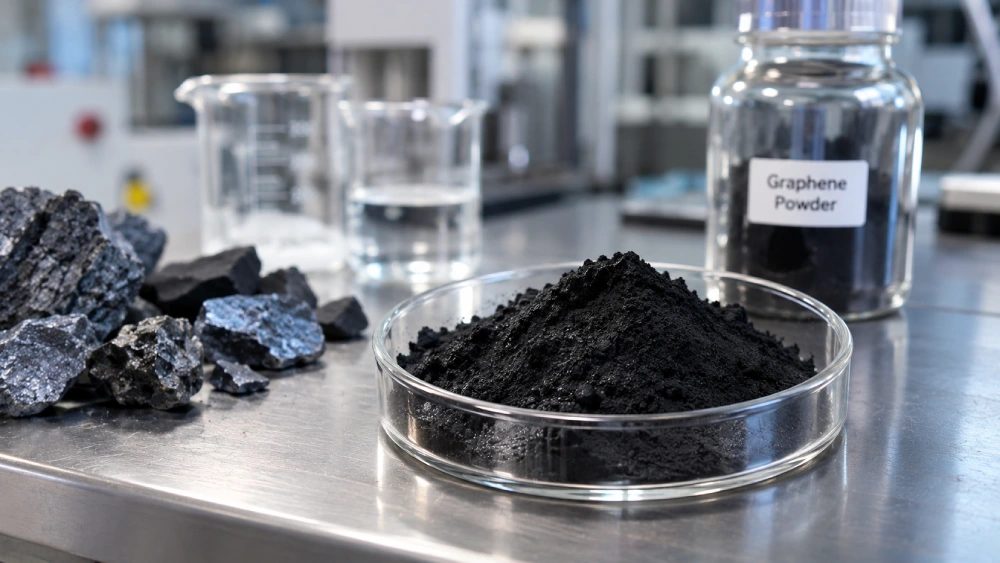
What STREAM Actually Produces
STREAM was developed at Grapherry, Inc. under the leadership of Dr. Vikas Berry, Grapherry’s founder and now Argo’s CEO.
The platform converts carbon-rich feedstocks into graphene materials. It is designed to address three challenges that have historically limited graphene’s wider industrial adoption: scaling production, maintaining consistent output between batches, and improving process efficiency for commercial viability.
STREAM supports two distinct output materials. Having both gives Argo the flexibility to pursue different applications rather than building its business around a single graphene product.
STREAM-G
STREAM-G is the graphene output from the platform. It provides a material for applications where graphene’s properties are being evaluated across industrial and advanced technology markets.
STREAM-O
STREAM-O is the graphene oxide output. This is the form Argo has used in its cement additive testing.
What the Published Material Data Shows
Grapherry publishes a technical data sheet describing the graphene produced through STREAM. These material specifications matter because they provide a starting point for evaluating the material and its potential applications.
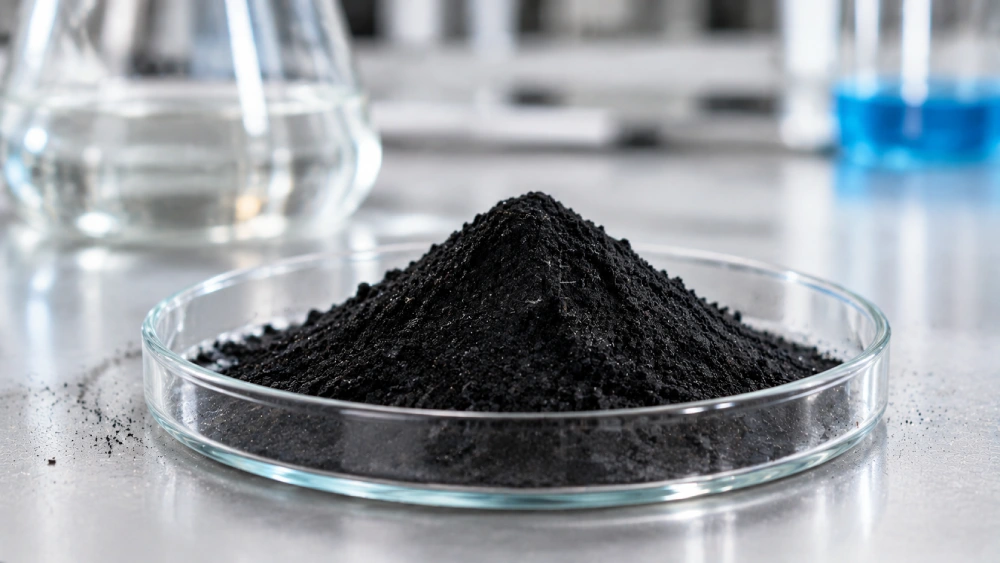
Material Characteristics
- Appearance: Fluffy, black, dry powder.
- Layer thickness: Approximately 1–5 layers.
- Carbon purity: Above 95%.
- Carbon structure: Predominantly sp2-bonded carbon.
- Oxygen content: Below 5%.
- Sheet dimensions: Approximately 1–5 microns across.
Together, these specifications describe a few-layer graphene material with high carbon content and relatively low oxygen content.

How the Material Is Characterized
Three standard analytical methods are used to characterize the graphene described in Grapherry’s technical data sheet. Each examines a different aspect of the material’s structure and composition.
01. Raman Spectroscopy
Raman spectroscopy showed a strong G peak and a well-defined 2D peak. These signals are used to assess graphene’s layered structure and defect characteristics, with the reported peak ratio consistent with few-layer graphene.
02. X-ray Photoelectron Spectroscopy (XPS)
XPS showed a dominant signal associated with sp2-bonded carbon and only minor oxygen content, supporting the reported high-purity surface composition.
03. X-ray Diffraction (XRD)
XRD showed a dominant peak consistent with a layered structure, with few crystalline impurities reported.
Each method provides a different view of the material. Taken together, the reported results support the material description in Grapherry’s technical data sheet.
The Deal Behind the Platform
The structure of Argo’s agreement with Grapherry is worth understanding on its own.
Argo did not simply buy graphene in bulk. It secured an exclusive worldwide license to STREAM, with a contractual pathway to full ownership of the technology.
That distinction matters. A supply agreement gives a company access to a product. A license with a path to ownership gives Argo a route toward control of the underlying production process, including the ability to develop production capacity rather than depending solely on an external supplier.
It also explains why Dr. Vikas Berry, who developed STREAM at Grapherry, later became Argo’s CEO. The company’s strategy is focused on the technology that makes the material, not just the material itself.
Turning Waste Into Graphene
Another important part of STREAM’s long-term potential is its feedstock flexibility.
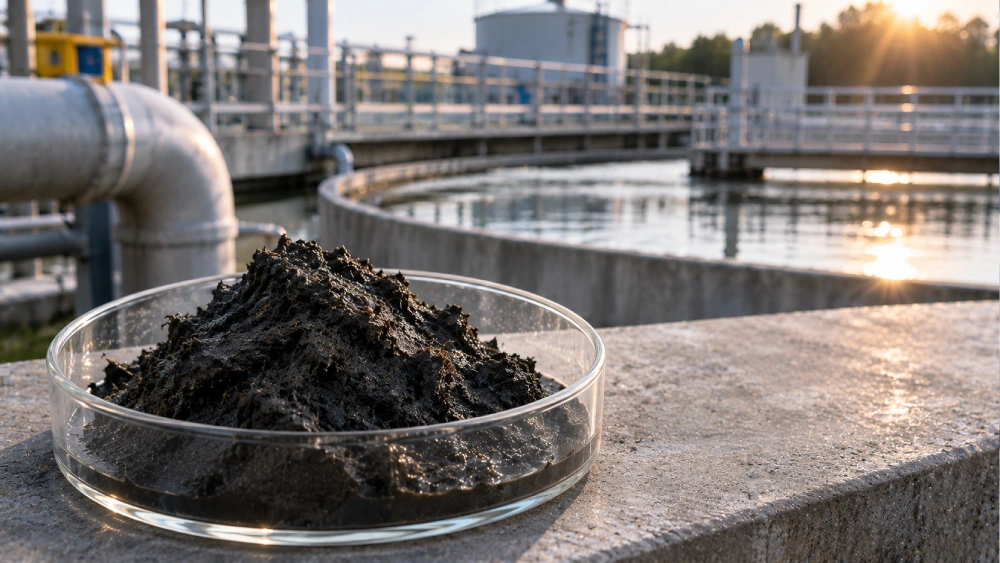
Argo’s CEO recently presented a waste-to-graphene strategy at an American Chemical Society symposium on the circular water economy. The presentation highlighted the potential to convert carbon-rich sludge from wastewater treatment plants into graphene using the STREAM platform.
The concept is to treat material traditionally considered waste as a potential raw input for advanced materials. Those materials could eventually be used in areas such as batteries, construction products, and composites.
This is a different starting point from sourcing and refining graphite specifically for graphene production. It is also central to Argo’s strategy of exploring how STREAM could support a wider range of feedstocks and applications.
Betting on Many Markets at Once
Argo is not positioning STREAM as a concrete additive technology that happens to produce its own graphene. It is evaluating the platform across several industries.
These include:
- Energy storage
- AI infrastructure
- Semiconductors and advanced electronics
- Construction and infrastructure
- Polymer composites
- Agriculture
- Coatings
This is a platform strategy rather than a single-product strategy. Argo is exploring whether different outputs from the same underlying production process can serve different industrial needs.
Whether that breadth becomes a strength or a distraction will depend on how effectively the company executes across multiple markets. That remains to be demonstrated.
What This Means in Practice So Far
The clearest published proof point so far is in concrete.
Argo’s cement additive testing, using graphene oxide produced through STREAM, measured a 60% increase in ultimate compressive strength at a dosage of just 0.05% of the cement weight. The result was reproduced across multiple independent test batches.
Beyond concrete, Argo and Grapherry conducted a summer 2026 application testing program covering graphene in cement reinforcement and polymer composites. The work was supported by interns based in the Chicago area, where Argo is also working to establish a facility to advance STREAM’s development.
That combination — a reported result in concrete alongside active testing in additional materials — represents the current stage of the platform strategy.
It is still early. Many of the applications STREAM could eventually support remain under development rather than commercialized.
Your Questions About STREAM, Answered
STREAM-G produces graphene, while STREAM-O produces graphene oxide. Argo’s cement testing has used the graphene oxide form, which is the material used in its cement additive work.
Not yet. Argo holds an exclusive worldwide license to the technology, with a contractual pathway to full ownership, rather than outright ownership from the start.
Argo has presented a waste-to-graphene strategy exploring the use of carbon-rich feedstocks, including wastewater treatment sludge, as raw material for the platform. This is part of the company’s stated strategy, not yet a commercialized product.
No. Argo’s most advanced published result is in concrete, but the company is also testing STREAM materials in polymer composites and evaluating applications across energy storage, electronics, and other industrial markets.
The Bottom Line
Argo isn’t just buying graphene. It licensed the production platform that makes it, with a path toward owning it outright, and is assessing whether that platform can serve multiple industries rather than just one.
The published material data describes STREAM’s output as few-layer, high-purity, low-defect graphene and graphene oxide, supported by standard characterization methods.
What’s still unproven is whether a single production platform can deliver across as many markets as Argo is pursuing.
Conclusion
Owning the platform, not just the product, is the strategic direction Argo is pursuing. The published material data provides a basis for understanding what STREAM can produce today, while the company’s ongoing application work explores where those materials may be used next.
The potential applications span multiple industries, but the broader platform strategy will ultimately depend on further testing, development, and commercial execution.
For a closer look at how graphene works in cement, read our article on how graphene concrete works. You can also explore our coverage of graphene cement for stucco and 3D-printed construction.